Tuesday, March 20, 2007

Chinese Random Roadside Construction

I read recently that the average commute time for a typical person in a major US city is 35 minutes. The major news magazine shows have even featured new neighborhoods in California that are specially designed for airplanes. Instead of sitting in traffic jams, commuters to Silicon Valley or San Francisco fly to and from work. How cool is that? Check out stories about that here, here and here.

Like any modern person, I have a commute as well. Typically I take the bus 106 from my 东门中 stop to 南岭村. The trip usually takes about 25 minutes in the morning without traffic and 30+ minutes in the afternoon, depending on traffic. In general, it is a pretty good ride. One stretch of the road is a narrow highway next to the Shenzhen Reservoir. The early sun shining on the water is a pretty sight.

One of the recent things I’m noticed are big mounds of dirt on my route. Everyone who has been to China knows that there is constant construction everywhere. New buildings are appearing every 5 months. I’ve heard of a stat saying that China has 1/3 of the world’s construction cranes. Crazy stat. If you look at the Beijing skyline, it is filled with cranes.

After 5 months in Shenzhen, I have rarely seen any big construction cranes. I’ve only seen big mounds of dirt and road construction/repair, particularly outside of main Shenzhen city (深圳关外 instead of 关内, my work is located just outside of Shenzhen city).

The 30 minute commute in the morning and afternoon has now been extended to about 45 minutes. There are not more cars on the road. There are just, what seems to be mom & pop construction jobs going on everywhere. Here are the characteristics:

  • New road construction projects (I’ll call RCPs) can pop up anywhere and everywhere. It doest matter if it’s in the middle of a parking lot or in a major intersection.
  • RCPs are dug out with complete disregard for pedestrian or car traffic.
  • Most RCPs happen outside of the main part of Shenzhen. The suburbs, in general, are crazy (很乱). Higher crime rate, prostitution, ect. I guess that also applies to road construction.
  • The Chinese workers for these RCPs all work at night. You never see anyone working during the day.
  • There are no signs to warn you. There are no detour routes or anything else to direct traffic. There is only a small little makeshift gate or fence around it. (Think about this happening on your local highway in the US. Just unimaginable.)
  • The dirt dug out of the ground goes everywhere. There are mini dust storms almost like ones seen in old westerns with John Wayne.
  • Contracts to work on roads are very competitive and lucrative. The profits from getting a construction projection from the gov’t are huge!
  • Quality is iffy.

For now, I just want to thank China for making my commute longer. You can be blamed for me being late to work today. I'm also blaming you for my dirty shoes too.


Addition 2 (3/26/07): To respond the the 2nd comment made my Anonymous... In my opinion, it is important to look at the public face of China and differentiate it from its private attributes. The Shanghai Pudong airport is a state of the art airport in what is considered the most modern and "best" Chinese city. This means that the Pudong airport is a national treasure. This is why it is important that there was a international design competition and very international press on it. The same is true for the new buildings in Beijing, such as the National Theatre (Egg-shell), new Olympic Stadium (Birdnest) and Olympic Water Sports Arena (Water Cube).

My question is: does anyone know what company was has been hired to not design it, but actually construct it? As well, what was the bidding process behind that.

Addition 1 (3/22/07): To respond to the comment made by Anonymous, China's large road construction projects are indeed very competitive to obtain. This competition isn't direct or indirect bribery. It exists almost in the form of traditional US competition. There are many bids and proposals for the project and one is chosen. The only difference is that the bidding parties in China need to have some kind of high level connection (关系) in the local government to successfully bid. In the US, you need to have huge resources, a reputation and track record to successfully bid.


Monday, March 19, 2007

The Entrepreneur Spirit: Part 1

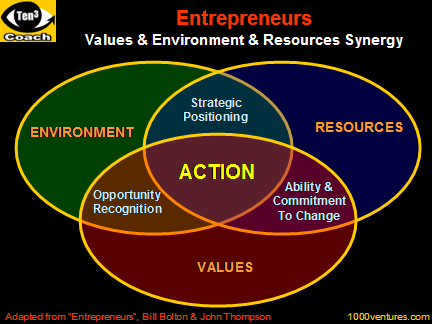
Recently, I had a conversation with a couple of friends on the possibility of starting a business. (I don't want to get into the specifics since my friends might still want to do it).This business idea was something that I thought was a viable option for a good and profitable business a while back. I liked it enough that I even wrote up a Western-style business plan of what was needed to do to get it started; what the minute details were to make it successful, how to get other people on board, ect. However, since I didn’t have the energy, time, connections and capital, I kind of just let it go and moved onto other things.

A few days ago, a couple friends of mine came to me wanting to do the same idea, I was happy that they wanted to pursue it and felt I could contribute a lot to the process.

Last night during dinner, we sat around the table eating Mongolian bbq and slowly discussed (谈一谈) the business. After 5 minutes of conversation, I knew we were not going to get anywhere. After the initial exchange of “wow, this is a great idea… I think we could make so much money,” I wanted to get down to the important details of the first step of concrete tasks needed to be done. All we had at the time were broad generalizations.

As I listed out the issues that needed to be addressed for me to succeed (on my end), I was given a feeling of hesitation and almost annoyance. My friends didn't want me to talk about the details. They just wanted me to say “yes, I’ll be awesome and everything will be taken care of.” In a perfect world, that would be the case. I would love to make a grandiose statement of what I will accomplish immediately without worrying about actually performing. However, in the real world, I want and expect to discuss the weakness and threats of the idea as well as the strengths and opportunities (thank you SWOT analysis).

Well, this didn't fly. So, instead of having a productive business meeting (in my eyes), we were all halfway annoyed and disappointed in the other side. Before finishing up this issue, my friends described how they approached business.

“You need to learn on the fly while you are doing your business. Forget all the details, worry about them when they appear. Go for it.”

Although I would agree with the adventurous spirit, as well the how useful learning by experience is, (I talked about this briefly in Money Money Money), one can only get so far with that approach. When a large amount of time, energy and capital is invested in a project, I will absolutely attempt to find all the potential problems and iron out all of the details before I get too far.

After I tried to explain this mindset (and hopefully other people’s mindset as well), I was still greeted with hostility from my friends. They didn't need or have to do this. It was almost like it was their destiny to succeed and be successful. They were unwavering and had the utmost confidence in their ability to deliver in whatever venture they set out to do. Nothing could and would stand in their way.

This got me thinking:

  • I can not believe how confident my friends were. Even though they were all relatively successful businessmen, isn’t too much confidence just cockiness?
  • Is their confidence real or fake? Chinese people, particularly northerners, (and especially my family… I was born in Harbin) love to boast (吹牛). We love to exaggerate when talking. It’s just how we do it. My friends that I was talking to were all northerners as well.
  • Is it just too easy to make money here in Shenzhen? If its true that 10% of Shenzhen people between 20 and 60 want to open up their own business in the next year, they must have a lot of success in doing business to give them the reasons for starting businesses. It could be the chicken and the egg.
    • Entrepreneurs come to Shenzhen to start businesses.
    • Business is good.
    • More Entrepreneurs come to Shenzhen.

I’m going to let this one marinate a little bit and come back with a couple of examples in part 2.

Sunday, March 18, 2007

I Want Delivery!

I really like my Shenzhen apartment. It is nice, clean and just the right size for me. It has all of the appliances and furniture that I need and even a nice sized gym on the 5th floor (I live on the 27th). It is a 10 min walk to the pedestrian-only shopping area (老街) and the bus to work stops immediately outside the building. Oh yea, I almost forgot… check out the view.

My only complaint about my apartment is the lack of restaurants downstairs. There are a couple of mom & pop noodle places but that’s about it. To get any selection of restaurants, I need to walk at least 5-7 minutes away. Most of the time, a 5 min walk in China isn’t a big deal. However, when I’m hung over and don't want to get out of bed (like most Sundays), I just want something, anything.

Solution: Delivery.

Before living here in China, I had thought that delivery did not exist here. I have a lot of family who live in Beijing, Harbin and Shanghai. I have never seen any of them order delivery and/or even have delivery menus. I was pleasantly surprised that it at least exists in Shenzhen. Because labor is so cheap here, many restaurants have a couple of people specifically for delivery purposes in the neighborhood. Although I don't imagine it to be Justin-Timberlake-popular, like it is around the Columbia University campus (oh how I miss eating Chinese Wai Lee) it is still most definitely needed.

Every couple of days when I’m walking in and out of my building, I see delivery people bringing food in. As a relatively new resident, without any knowledge of which restaurants deliver, I make an effort to talk to these delivery people and get a menu from them. What’s interesting is that after talking to delivery people on more than 40 different occasions, I have only obtained 1 menu.

Only 1. That’s it.

What are these people doing not carrying menus around when they’re fulfilling an order? I don't understand it. In a selfish sense, I want the added convenience to get some food without getting out of the apartment. But from a business perspective, how can these restaurants not require these people to carry tons of menus on them. This would not only be a good way to market their restaurant, but it would give the non-cooking population somewhere to order from.

Above all, how has any restaurant owners recognized that no one else is doing it and they can almost corner neighborhood market for delivery? My neighborhood has 4 buildings, 26 residential floors in each building and 12 apartments on each floor. Assuming that there are 2 people living in each apartment (a low estimate) the total number of people is 2500 in this building complex alone. Combine the 5 other complexes around me together, and it’s a sizable customer base for a small restaurant.

As a veteran of Columbia University fast food, I can only describe the competition for take-out as a war.

Here are the details:

  • Basically all of the restaurants post on online menu websites like dogears.net, menupages.com, so that people can have quick access to their menus.
  • Some places even list on services like Campusfood.com where the order can be made directly online, quickly and easily.
  • Restaurants advertise on billboards, newspapers, ect.
  • Every order has at least 1 menu in the delivery package.
  • Some restaurants even use their menu as an invoice/bill for the customer with the ordered items highlighted.
  • All delivery people have menus with them at all times. They place these everywhere, especially at the outside door to an apartment building.
  • Rivalries and aggressive tactics were used by the 3 local Chinese delivery places. Every time one place made a delivery to a dorm building, they would take all of the other 2 restaurants’ menus and replace them with their own. Talk about cutthroat.

All of these practices in Columbia University and NYC in general are geared to maximize the exposure of the restaurant in a competitive landscape as well as make it convenient for the consumer to order delivery. This is life in a mature marketing environment.

Now if only any Chinese companies can take a hint and figure stuff out, I might be able to order from them instead of going to McDonald’s.


Saturday, March 17, 2007

McDonald's: Super Sizing the cute Chinese Kids

I love McDonald’s. I have since I was a little kid. I can still remember my mom taking me to the McDonald’s on High Street right next to the Ohio State University campus as a little kid. Tuesdays, 19 cent hamburgers, 29 cent cheeseburgers. MMmmmm.

Fast forward 15 years later.

I was a little sick yesterday so I took off work and stayed home for the day. When I was young, it seemed that every time I was sick and went to get McDonald’s, I would get better immediately. That has now transformed into a tradition. Instead of having Chicken Noodle Soup when I’m sick, I have a Big Mac extra value meal with a sprite. Conveniently so, there is a McDonalds within a 5 minute walk from my current Shenzhen apartment (I can actually see it out of my window) when I can maintain this habit.

Although I do eat fast food, I do not consider it to be as bad as what’s made out in the 2004 documentary Super Size Me. In this documentary, a guy eats McDonald’s food for breakfast, lunch, and dinner for 30 days straight as an experiment. The results were surprising and interesting. To briefly summarize, after 30 days, the guy became depressed, had lost his sex drive, gained 20 pounds, and had liver issues, ect. (Please check out this documentary if you haven’t seen it. I own it on DVD (not even bootleg) and have watched it more than 5x.)

In my opinion, eating anything each and everyday could have adverse effects on the body. Many vegetarians and vegans don't get enough protein. People in China don't get enough calcium in a typical Chinese diet. It is important to have a complete diet with a variety of foods. Like my mom says: Eat at least 15 different types of foods a day (beans, rice, beef, carrots, ect.) and everything will be ok.

So back to the story,

Yesterday, I walked over to the place at about 12:30pm. I saw something very interesting before I arrived. This McDonald’s is right next to what I call a “spider overpass” (the 4 corners of an intersection is linked by 1 common overhead walkway) There were 2 young McDonald’s employees handing out discount coupon sheets on this walkway. Of course, for anyone who knows China, these discount coupon sheets are very common. Various companies and restaurants give them out very often to promote as a marketing too. What was interesting about this marketing drive was that it perfectly coincided with the lunch break of an elementary school less than 50 yards away.

(A little background: In Chinese secondary education, it is normal to have school be divided into 2 parts, a morning and afternoon session. Students are allowed to leave campus for lunch to eat at home.)

Of about 90% of the students leaving for lunch walked on this “spider overpass” to get to various destinations. The 2 employees had a stack of coupon sheets at least 10 inches high. They knew exactly what they were doing and made sure that every one of those kids received one.

In Super Size Me, one of the main things they narrated was the strategy of McDonald’s and fast food in general. The ultimate goal was to get the kids hooked on this stuff. Examples of this included a scene where 20 elementary school kids were shown pics of various famous people and Ronald McDonald, the McDonald’s mascot. Of course, everyone knew who Ronald was and no one knew anyone else. Another scene described the design of McDonald’s and its playground area and success in birthday parties as ways to lure kids in. Just look at the happy meal. McDonald’s invented kid’s meals.

I definitely believe in this hypothesis.

Here’s what I’m thinking:
  • China creates a good opportunity for this because more kids are responsible for their lunch. Yesterday in the McDonald’s, of the 200 people there, over 80% of the consumers were under 25, at least 60% wore the little blue/white school uniforms. Many of these kids were carefully browsing the coupons they just newly received. I guess this strategy is working.
  • Another good strategy for fast food companies like McDonald’s in China is to give away student discount cards that last for a year. These cards give about a 20% discount on selected items for the student.
  • I didn't see KFC representatives out in force like the McDonald’s employees. Even though KFC has a bigger market share than McDs in China, I wonder what their kid strategy is and its importance. I do know however, that they give away student discount cards as well.
  • McDonald’s creates such a fun and embracive atmosphere, that kids love it. Yesterday, I even saw a few kids help the hand out the coupon sheets to their friends. That’s just marketing at its best.
  • I guess I’m a product of the “luring of kids”. I was lured in as a little kid and I’m still a consistent McDonald’s consumer as a yuppie.
Although I have been "lured" in, I have an athletic background and try to watch what I eat as much as possible. As a disciplined adult and someone with a diverse palate, I would never go on a Super Size Me-esque binge. I will however, enjoy a Bic Mac or 2 once in a while.

What is difficult to see is how Chinese kids will be able to control themselves. These kids are being sucked in every single day. Let's just hope that McDonald's don't form an alliance with the schools and make it mandatory for kids to stay at school for lunch.

Has anyone tried their new mini Chicken wraps? Those are hella good too.

Thursday, March 15, 2007

The Perfect Red Storm

In my February 24th post entitled Money Money Money, I attempted to discuss Shenzhen and its unique-ness. As everyone might already know, Shenzhen was a fishing village 20 years ago. Now it is one of the biggest cities in China with an average income comparable to that of Beijing and Shanghai.

With a combination of a favorable political environment, location and local culture, Shenzhen has become a bustling metropolis that is comparable to just about anywhere in the world.

Here’s an excerpt from a recent Bloomberg article:

World's Factory

Shenzhen became the world's factory because Deng, then the paramount leader, selected it in 1980 as the launching pad for his open-door policy. Driven by his vision, the municipal authorities put in place the key amenities long before international investors took the bait.

What in 1979 was an agrarian backwater of 300,000 people is today a bustling metropolitan city of 11 million.

Shenzhen now has the world's fourth-busiest container port and China's fourth-largest airport. Expressways connect the industrial areas to a vibrant downtown. A subway system became operational in 2004. New towns are constantly being built, distances are getting squeezed.

This description of Shenzhen (as well as others like it) is just the tip of what Shenzhen is. In a recent Shanghai Daily article, Shenzhen was mentioned again. This time it was compared to Shanghai.

The Shanghai Labor and Social Security Bureau surveyed 23,000 city residents aged 16 to 64 in their homes last December about their attitudes towards starting a business.

The number of respondents who had opened their own company by the end of last year - 5.01 percent - was up slightly from 4.9 percent at the end of 2005.

By comparison, only 3.42 percent of respondents to a similar survey in Beijing said they had started a business, while a whopping 10.49 percent of those surveyed in Shenzhen, Guangdong Province, had opened their own company.

Wow.

Shenzhen’s population is 2x more likely to start a business than the people in Shanghai, and almost 3x more likely than Beijing. It’s amazing what the last 20 years has done here in the Pearl River delta.

Here were my thoughts on Money and Shenzhen:

  • I often try and think/develop business ideas. Moreover, I have a few possibly successful ideas that I’m working on.
  • This is why Guangdong province is so incredibly successful in the world stage. This is not only where Chinese people who want to make money (whether it’s migrant labor trying to get ahead, HK businessmen with capital, ect.), but it is where the world is coming as well. Of course its location and proximity to HK has something to do with it as well.
  • I wonder if the culture is similar in the Shanghai region as well. Can anyone who knows about Shanghai add their 2 cents?
  • This entrepreneurial spirit feels like pure excitement. There are so many opportunities in China for anyone with a good idea. It is the ability as a person to take advantage of these opportunities. This is a big difference from the seemingly repetitive life of the US and even NYC.

I guess the Shanghai Daily article partly answered my question. Even Shanghai, the financial capital of China, can't compare to Shenzhen when it comes to the entrepreneurial spirit.

Just to repeat this point and beat it over the head:

Shenzhen is a place like none that has ever existed in the world. Its unique combination of culture (or lack there of), government regulation, people, location, resources, ect. have created a place where capitalism is existing in an almost pure form.

It might as well be the Perfect Red Storm.