Wednesday, June 27, 2007

Challenges ahead for the iPod & iPhone in the China Market

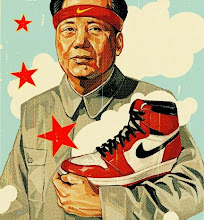
In college it seemed like that I was the only one without an iPod. Everyone had one. Not only did consumers in the US embrace the iPod, Shuffle, Nano, ect., they also bought up the Powerbook laptops, G4s and now.. iPhones. Everyone.

In China, its a different story. Apple has very little presence here. Although all of its products are manufactured in the factories in Guangdong province and Shenzhen, no one actually has them here. When I have my iPod out on the subway or bus, everyone stares at it. They've never seen it.

What Chinese people have seen are the generic iPods. Since everything is produced here, there are hundreds of small factories and software houses that have copied all of Apple's products. These generic mp3s, and mp4s (with color video capability) have been out on the market for many years. It's possible to get these wholesale for less than $10... and Chinese people have been buying them. Apple and its products have little, if any presence here.

Well, i guess Apple is attempting to change that. In recent months, there has been a significant and growing presence of Apple marketing. Not only are they opening more specialty shops in the most glamorous malls, but they are also putting up ad campaigns on the street.

2 days ago, I also (finally) saw an iPod commercial on Chinese TV. It was the same exact one that Steve Jobs showed off at this year's Apple convention (where he introduced the iPhone)... instead it had Chinese subtitles on the bottom. Good start.


We'll see how the Chinese market develops for Apple and its wide range of products. It's success here is far from certain, however, as many people have discussed the issues of it. A great post on Silicon Hutong called "The iPhone is not for China" has already described a hard market for Apple to tap into. This is probably why a Chinese company has already made an alternative to the iPhone. Only time will tell.

Saturday, June 09, 2007

Chinese College Entrance Examination - 高考

June 7,8,9.

Every year, these 3 dates are the most important dates for millions of Chinese students (and their families and friends) taking the annual Chinese College Entrance Exam.

The Contra Costal Times has a great article titled "College exam impacts all of China" that accurately describes the test process that influences soo many people each and every year.

College admissions in China is strictly based on the score from the test.

Unlike the U.S., where standardized test scores are just one factor weighed by universities, how Chinese students do on the "gaokao" determines everything. Students list their top three schools and their major and hope their score is high enough to win a place.

Extracurricular activities do not count, and neither do high school grades. And forget writing about volunteer work; there are no essays to persuade admissions officers.

Every student is tested in 5 different areas. Each student is required to take the Chinese, English and Calculus test. The final 2 areas are different depending on the student pursuing a Bachelor's of Arts or a Bachelor's of Science degrees. They take History and Social Studies versus Physics and Chemistry, respectively.

Each test is scored on a scale of 150 points for a maximum possible of 750 points. Each university has a low cut off point. The top universities like 北京大学 choose first and pick the best students. Students with more than 600 points are considered. Those who were not chosen are then available for the next schools. This process goes on until all of the spots in every university are filled.

This process is accurate for the vast majority of students in China. A few percent of students go to school in other ways. These might include going to a specialized school where the student was recruited. Just as schools in the US recruit for sports, Chinese schools recruit for sports, as well as other areas of study.

Chinese gaokao has been such a important thing that kids are tutored and nurchered at a young age, to be ready for it. College exam impacts all of China describes a mother waiting for her daughter to finish the test.

Li Yukun gripped a bouquet of pink roses, a gift for her 18-year-old daughter who has been tutored every weekend since middle school.

"These 12 years have been so hard. These roses are to show her that I care, it's been so hard for her, not one day of rest," the mother said.

Due to the importance of the test, high school in China has also become a "breeding ground" and very different than its US counterpart. The typical Chinese high school lasts 3 years. In the first 2 years of high school, a student takes all of the classes as a normal US high school student with new material. In the 3rd year (senior year), high school transforms from a place of learning to a place of preperation. Instead of learning new material, the entire year is used to review and focus on the old material (in order to be ready for the entrance exam). Students prepare with extensive study sessions, mock tests and outside tutors.

Years of study, hope, investment and hard work all comes down to the exam. Make or break. Win or go home.

June 7,8,9.

Tuesday, May 22, 2007

Shenzhen Restaurant Sanitation

When I first moved to Shenzhen almost a year ago, one of the first thing I adjusted to was the food. It is very well known that different areas of China have vastly different cusine... which means that I wasnt initially used to the soups and the seafood.

One of the things I didnt expect to see was a difference in pre-meal practices. In Shenzhen, before any ordering or eating is done, everyone washes their bowls and utensils with tea. The process goes something like this:
  • First the hostess pours tea in the customer’s tea cup
  • The customer swirls the tea back and forth in the cup so that the tea touches all sides.
  • After doing so, the customer pours the tea from the tea cup into the bowl in a process that also passes the tea by the chopsticks and spoon.
  • The customer swirls the tea inside the bowl
  • He pours the tea into a communal bowl depository, which the hostess takes away and discards.

This process is supposed to help clean the utensils and make them more sanitary to eat from. (I don't know how effective it is.) It is definitely an established tradition that everyone here in Shenzhen participates in.

Recently, there have been increases in the number of restaurants that send their china and utensils out to be sanitized. After cleaning the china with their heavy duty machinery, the sanitizing company then sends the cups and bowls back in convenient and individually wrapped plastic. This is to ensure that all of the materials are clean and sanitary. Restaurants usually charge the customer 1 RMB for this service.

Although many customers do not think this charge is a big deal, the majority of Shenzhen is talking about this outrage. I recently heard talk radio programs condemning this unjust charge. Here’s their argument:

  • It is the restaurant’s duty to provide clean and sanitary china and utensils for their patrons.
  • Because it is the restaurant’s duty and responsibility, (many believe that) any cost for this should be within the operating cost of the restaurant and should not be directly charged to the consumer.
  • If this charge is to be charged to the customer, then it should be done in a fair way. The average cost for a restaurant to perform this sanitation service is only 0.40 RMB. Why are restaurants charging 1 RMB for the service?

This issue has been debated and talked about for the past weeks on the internet and different radio shows. We’ll see what happens. In the meantime, keep a watch out for the nicely packaged china and utensils at a restaurant near you.

Wednesday, April 25, 2007

Future China/US Trade War?

There has been an abundant amount of coverage on the possible US sanctions towards Chinese goods if China doesn’t appreciate the yuan at a faster pace than it is doing currently. Paulson: China must implement reforms describes current US Treasury Secretary’s view of what’s going on.

Paulson said there is agreement in principle between the U.S. and China on the need for greater yuan flexibility. The discussion is about "the pace" of change.

"They're moving, but they're not moving, in my judgment, quickly enough," he said. "China is by far the largest" economy that doesn't have a market-determined currency, but enjoys the benefits of the global economy."

In a 4/21/07 Bloomberg.com article entitled Paulson Says China Must Yield `Tangible Results' on Yuan, Trade, Paulson described the possible consequences and repercussions if China doesn't act quickly.

"The American people are concerned, Congress is concerned and there's a lot of protectionist sentiment'' toward China, Paulson said in an interview on the ``Charlie Rose'' show on PBS television following his speech in New York." The more tangible reforms we see, the easier it is for me to deal with Congress.''

"There will be some, I believe, unattractive bills that are voted on in Congress,'' Paulson acknowledged. "I think the Chinese are very well aware of this -- I think they should be aware of it.''

Other parts of the Bush Administration have also taken action by imposing import duties on Chinese glossy paper and by filing 2 complaints to the WTO for copyright infringement and piracy.

The feeling of uncertainty in Chinese and US relations changed 2 days later in another Bloomberg piece by Matthew Benjamin. In his story, called Paulson May Be Unable to Get China, U.S. Off Collision Course, Benjamin painted a grim picture if reforms in the Chinese currency doesn't happen soon.

Without steps to allow a significant increase in the yuan, which most economists consider unlikely, Paulson may not be able to continue holding off moves in Congress to punish China.

"After years of talk and bluster, protectionism no longer seems like an empty threat,'' says Stephen Roach, chief global economist at Morgan Stanley in New York. "Trade sanctions against China are now all but inevitable.''

These increasingly real threats come with the backing of Congressional democrats who maintain that they would achieve “strong and effective legislation is likely to pass with a veto-proof margin.”

Although it might seem that the appreciation of the yuan is all but unavoidable, Benjamin also shows the hidden side of the currency struggle, relating both US and Chinese workers and businesses.

When China allowed a small rise in the value of its currency in 2005, Hangzhou food-company executive Wang Yuzhou saw his profits squeezed. Any further move threatens the livelihoods of his 1,000 workers and the 5,000 rural households that supply his plants, he says.

John Walker says China's currency policies have already cost 100 jobs at his Lewisburg, Tennessee, die-casting company. He wants the U.S. Congress to do "whatever it takes'' to force an increase in an undervalued yuan that he contends gives an unfair advantage to Chinese competitors.

Citizens on both side of the Pacific Ocean have money, family and livelihoods at stake. It is often easy for Americans (me included) to jump into the US perspective (of John Walker) while being ignorant of Wang Yuzhou’s plea.

But what can China do other than to appease the US on their currency appreciation wishes? The answer lies in a recent 4/18/07 NY Times article. China Leans Less on U.S. Trade describes the readjustment of China’s global trade strategy.

At booth after booth at China’s main trade fair (Canton Fair) this week, the refrain from Chinese business executives is the same: the American market is not as crucial as it used to be.

Instead, Chinese producers of everything from socket wrenches to sport utility vehicles say, their fastest growth these days lies in Europe, Africa, the Middle East, South America and elsewhere in Asia — in other words, practically anywhere other than the United States.

So it is throughout China. With ample support from the Beijing government — including a flurry of trade missions to Africa and assistance with trade fairs in Germany, Australia or someplace in between — Chinese companies are poised to expand into the markets of many of the world’s rapidly growing economies.

By placing the focus on new markets for the abundant amount of Chinese goods (produced in cities like Shenzhen), Chinese businesses are beginning to hedge their profit margins and risk.

The government and companies across China increasingly see a danger in becoming too dependent on a single market (USA). So they are stepping up efforts to sell to other countries, particularly those outside the industrial world.

This change in direction is a small but important step for China. Maybe in the future, they will not need to be so dependent on American politics and their tariffs.

On the other side: what would happen to the US if cheap Chinese goods start decreasing?

Tuesday, April 24, 2007

Shenzhen Driver Licenses for Newbies

A lot has been made about the Auto Shanghai 2007. A Shanghai Daily article entitled China shows prowess in clean-fuel vehicles describes the situation:

China topped Japan as the world's second-largest car maker last year, with sales up 25 percent to more than 7.7 million units.

Homegrown brands increased their share of the passenger car market to 30 percent last year from 25 percent in 2005.

This year an unprecedented number of homegrown brands showed off their latest efforts to embrace the cutting edge of automotive technology.

Chinese car makers have been increasing efforts to develop new designs and build their brands into household names since last year, but the car show is the first major opportunity for them to showcase their research and development on the vehicles of the future.

Early last year, Shenzhen media announced that there were 1 million registered cars in Shenzhen. Although this may be a surprise for everyone driving on shenzhen’s streets (since it seems more like 10 million), it’s true and will soon get worse. Officials projected that by 2010, the number of cars will double to 2 million.

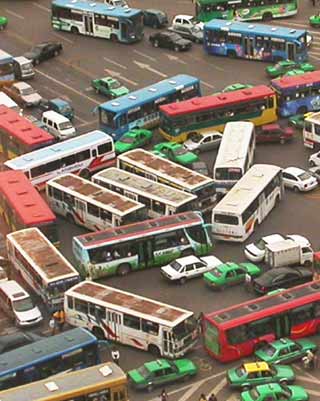
The potential growth in the market and the optimism for its future development is slowly being clouded by the situation on the ground. Traffic jams occur every day in every city. Cars are impossible to park and the streets are becoming more chaotic. It might even feel like the social fabric is slowly unraveling. (Check out my post, Blackout Shenzhen? Felt like it. for more.)

A recent Shenzhen Daily article, Driving license scam exposed, sheds new light on the increasingly worse situation.

Nearly half of all new drivers in Shenzhen obtained driving licenses from other cities without undergoing proper training…[where] local training schools arranged for one-day tests in other cities, including Shanwei in Guangdong and Ganzhou, Ji'an and Jingdezhen in Jiangxi.

Some schools simply "sold" driving licenses issued in other cities, the paper said. Such driving licenses are usually issued three months after 4,500 Yuan (US$582) is paid, and no test is needed, according to the report…

[Just] before the Spring Festival this year, up to 2,000 trainees of a Shenzhen driving school took dozens of buses to Jiangxi to take part in one-day tests. Most trainees passed the test in the first attempt. The few people who failed initially all passed in the second attempt, the paper said, implying that the school bribed the authorities to make it easier for its trainees to pass the tests.

It is almost expected that scams like this would occur for obtaining drivers licenses. With the increase in the Chinese middle class combined with the increasingly high costs just to go to a driving school and obtaining a license, “entrepreneurs” are taking advantage where they can. I even recently saw a post on one of the Shenzhen expat forums where one person was offering a similar service for foreigners. For 1000 Yuan, this person would walk you into the test and tell you all the answers for the driving test. Quite a deal.

Hopefully the Shenzhen government can do more to prevent untrained drivers from getting on the road ASAP. Otherwise, ill be sitting on bus 106 for another 90 minutes just to get to work.