Wednesday, August 27, 2008

NY Times is Beginning to Like China

During the entire Olympics period, the NY Times has many more "objective" articles regarding China. Recently however, they've taken it to another level - basically suggesting that the US should learn from China. Previously it was the interesting pros of having an authoritarian government and the benefits of being a communal society. Now its the inward focus and own-nation building.

In today's NY Times op-ed article A Biblical Seven Years by Thomas Friedman, China's emergence in its 7-year preparation for the Olympics is compared to the US and the 7 years since 9/11 and translated into an election contest between Obama and McCain.

Without even getting into the article itself, it is quite amazing the amount of "good press" China has gotten in the past few weeks because of the Olympics. It seems that the success of these Games have given China a better platform to showcase its achievements. Even though the human rights and Tibet issue is always raised in any general article, at least it is moved down further near the end of the article.

Here's the complete NY Times text:
After attending the spectacular closing ceremony at the Beijing Olympics and feeling the vibrations from hundreds of Chinese drummers pulsating in my own chest, I was tempted to conclude two things: “Holy mackerel, the energy coming out of this country is unrivaled.” And, two: “We are so cooked. Start teaching your kids Mandarin.”

However, I’ve learned over the years not to over-interpret any two-week event. Olympics don’t change history. They are mere snapshots — a country posing in its Sunday bests for all the world too see. But, as snapshots go, the one China presented through the Olympics was enormously powerful — and it’s one that Americans need to reflect upon this election season.

China did not build the magnificent $43 billion infrastructure for these games, or put on the unparalleled opening and closing ceremonies, simply by the dumb luck of discovering oil. No, it was the culmination of seven years of national investment, planning, concentrated state power, national mobilization and hard work.

Seven years ... Seven years ... Oh, that’s right. China was awarded these Olympic Games on July 13, 2001 — just two months before 9/11.

As I sat in my seat at the Bird’s Nest, watching thousands of Chinese dancers, drummers, singers and acrobats on stilts perform their magic at the closing ceremony, I couldn’t help but reflect on how China and America have spent the last seven years: China has been preparing for the Olympics; we’ve been preparing for Al Qaeda. They’ve been building better stadiums, subways, airports, roads and parks. And we’ve been building better metal detectors, armored Humvees and pilotless drones.

The difference is starting to show. Just compare arriving at La Guardia’s dumpy terminal in New York City and driving through the crumbling infrastructure into Manhattan with arriving at Shanghai’s sleek airport and taking the 220-mile-per-hour magnetic levitation train, which uses electromagnetic propulsion instead of steel wheels and tracks, to get to town in a blink.

Then ask yourself: Who is living in the third world country?

Yes, if you drive an hour out of Beijing, you meet the vast dirt-poor third world of China. But here’s what’s new: The rich parts of China, the modern parts of Beijing or Shanghai or Dalian, are now more state of the art than rich America. The buildings are architecturally more interesting, the wireless networks more sophisticated, the roads and trains more efficient and nicer. And, I repeat, they did not get all this by discovering oil. They got it by digging inside themselves.

I realize the differences: We were attacked on 9/11; they were not. We have real enemies; theirs are small and mostly domestic. We had to respond to 9/11 at least by eliminating the Al Qaeda base in Afghanistan and investing in tighter homeland security. They could avoid foreign entanglements. Trying to build democracy in Iraq, though, which I supported, was a war of choice and is unlikely to ever produce anything equal to its huge price tag.

But the first rule of holes is that when you’re in one, stop digging. When you see how much modern infrastructure has been built in China since 2001, under the banner of the Olympics, and you see how much infrastructure has been postponed in America since 2001, under the banner of the war on terrorism, it’s clear that the next seven years need to be devoted to nation-building in America.

We need to finish our business in Iraq and Afghanistan as quickly as possible, which is why it is a travesty that the Iraqi Parliament has gone on vacation while 130,000 U.S. troops are standing guard. We can no longer afford to postpone our nation-building while Iraqis squabble over whether to do theirs.

A lot of people are now advising Barack Obama to get dirty with John McCain. Sure, fight fire with fire. That’s necessary, but it is not sufficient.

Obama got this far because many voters projected onto him that he could be the leader of an American renewal. They know we need nation-building at home now — not in Iraq, not in Afghanistan, not in Georgia, but in America. Obama cannot lose that theme.

He cannot let Republicans make this election about who is tough enough to stand up to Russia or bin Laden. It has to be about who is strong enough, focused enough, creative enough and unifying enough to get Americans to rebuild America. The next president can have all the foreign affairs experience in the world, but it will be useless, utterly useless, if we, as a country, are weak.

Obama is more right than he knows when he proclaims that this is “our” moment, this is “our” time. But it is our time to get back to work on the only home we have, our time for nation-building in America. I never want to tell my girls — and I’m sure Obama feels the same about his — that they have to go to China to see the future.

Tuesday, August 26, 2008

Harmony and the Dream: The Difference Between East and West

In the 2nd semester of my sophomore year of college, I was honored to take a class with professor Jeffrey Friedman entitled Liberalism, Communitarianism and the Good. POLS V3027 was a political science class focused on theory and the development of political beliefs based on various factors, cultures and influences.

Not only did the class have an interesting focus, but it was taught extremely well. I can say that my life has been visibly changed since taking his class. These were some of the comments that students made after taking his class on CULPA.
Professor Friedman is the best teacher I've had. He is brilliant (you may think you've had brilliant professors before but this experience will make you re-evaluate that), intellectually rigorous (what do you say about a teacher who is able to tie all the tangents together), challenging (you WON'T find anyone who thinks like him and he expects you to think for yourself as well) and compassionate (really listens to students and seems to care). I have also never taken a class with such devastating intellectual and political implications.

He made people feel self-conscious about the quality of their comments in class. But, I will be forever grateful that I took this class because I got over my fear of public speaking and it really opened my mind and challenged me to think constantly during the class. He comes off as opinionated, but I think that's just because he knows he's right :). He really took the discussion to places I have never before nor since traveled to in any other class here. Always challenging us NOT to assume things, not to be lazy in thinking liberal ideology is always right, to read critically - to have our "bullshit detector" always on.

He's simply mind-blowing, funny, and the smartest person I've ever met (and that's genius level, because I like to think I'm pretty smart myself!). His democracy class was the best class I've taken at BC-- the readings on public ignorance and human fallibility were so compelling that I can no longer read the NY Times in the same complacent way I used to. Really, he should write a book and change the world.

After his class, it has been has almost been impossible to find worthy reading material on the NY Times ... until now.

Going through all of the NY Times daily emails that I had forgotten about during the Olympics, I found an amazing article entitled Harmony and the Dream written by op-ed columnist, David Brooks. It describes the basic difference between individualistic and collective societies (exactly like my liberalism and communitarian class) under the auspice of the 2008 Olympics in Beijing where the idea of friends living in harmony was a central theme during the Games.

The world can be divided in many ways — rich and poor, democratic and authoritarian — but one of the most striking is the divide between the societies with an individualist mentality and the ones with a collectivist mentality.

This is a divide that goes deeper than economics into the way people perceive the world. If you show an American an image of a fish tank, the American will usually describe the biggest fish in the tank and what it is doing. If you ask a Chinese person to describe a fish tank, the Chinese will usually describe the context in which the fish swim.

These sorts of experiments have been done over and over again, and the results reveal the same underlying pattern. Americans usually see individuals; Chinese and other Asians see contexts.

This concept translates further than just the Olympics. It is embodied in politics, business, society and even personal friendships. It is the small, yet overarching difference between the East and West. And I believe it is the key for mutual understanding between the different worlds.

David Brooks should continue this train of thought and help Americans and the western world examine and reexamine its view of China. There is much more to be written and seen.

Here is the full text of the article:

The world can be divided in many ways — rich and poor, democratic and authoritarian — but one of the most striking is the divide between the societies with an individualist mentality and the ones with a collectivist mentality.

This is a divide that goes deeper than economics into the way people perceive the world. If you show an American an image of a fish tank, the American will usually describe the biggest fish in the tank and what it is doing. If you ask a Chinese person to describe a fish tank, the Chinese will usually describe the context in which the fish swim.

These sorts of experiments have been done over and over again, and the results reveal the same underlying pattern. Americans usually see individuals; Chinese and other Asians see contexts.

When the psychologist Richard Nisbett showed Americans individual pictures of a chicken, a cow and hay and asked the subjects to pick out the two that go together, the Americans would usually pick out the chicken and the cow. They’re both animals. Most Asian people, on the other hand, would pick out the cow and the hay, since cows depend on hay. Americans are more likely to see categories. Asians are more likely to see relationships.

You can create a global continuum with the most individualistic societies — like the United States or Britain — on one end, and the most collectivist societies — like China or Japan — on the other.

The individualistic countries tend to put rights and privacy first. People in these societies tend to overvalue their own skills and overestimate their own importance to any group effort. People in collective societies tend to value harmony and duty. They tend to underestimate their own skills and are more self-effacing when describing their contributions to group efforts.

Researchers argue about why certain cultures have become more individualistic than others. Some say that Western cultures draw their values from ancient Greece, with its emphasis on individual heroism, while other cultures draw on more on tribal philosophies. Recently, some scientists have theorized that it all goes back to microbes. Collectivist societies tend to pop up in parts of the world, especially around the equator, with plenty of disease-causing microbes. In such an environment, you’d want to shun outsiders, who might bring strange diseases, and enforce a certain conformity over eating rituals and social behavior.

Either way, individualistic societies have tended to do better economically. We in the West have a narrative that involves the development of individual reason and conscience during the Renaissance and the Enlightenment, and then the subsequent flourishing of capitalism. According to this narrative, societies get more individualistic as they develop.

But what happens if collectivist societies snap out of their economic stagnation? What happens if collectivist societies, especially those in Asia, rise economically and come to rival the West? A new sort of global conversation develops.

The opening ceremony in Beijing was a statement in that conversation. It was part of China’s assertion that development doesn’t come only through Western, liberal means, but also through Eastern and collective ones.

The ceremony drew from China’s long history, but surely the most striking features were the images of thousands of Chinese moving as one — drumming as one, dancing as one, sprinting on precise formations without ever stumbling or colliding. We’ve seen displays of mass conformity before, but this was collectivism of the present — a high-tech vision of the harmonious society performed in the context of China’s miraculous growth.

If Asia’s success reopens the debate between individualism and collectivism (which seemed closed after the cold war), then it’s unlikely that the forces of individualism will sweep the field or even gain an edge.

For one thing, there are relatively few individualistic societies on earth. For another, the essence of a lot of the latest scientific research is that the Western idea of individual choice is an illusion and the Chinese are right to put first emphasis on social contexts.

Scientists have delighted to show that so-called rational choice is shaped by a whole range of subconscious influences, like emotional contagions and priming effects (people who think of a professor before taking a test do better than people who think of a criminal). Meanwhile, human brains turn out to be extremely permeable (they naturally mimic the neural firings of people around them). Relationships are the key to happiness. People who live in the densest social networks tend to flourish, while people who live with few social bonds are much more prone to depression and suicide.

The rise of China isn’t only an economic event. It’s a cultural one. The ideal of a harmonious collective may turn out to be as attractive as the ideal of the American Dream.

It’s certainly a useful ideology for aspiring autocrats.

2008 Beijing Olympics: It's OVER! Onto London 2012

The 2008 Beijing Olympics have officially come to an end. The stadiums are silent. The medals have been given out. The athletes have left. I cant believe the Olympics are already over. After spending soo long perparing for it, the 16 days quickly passed and we're now at Post-Olympics Day 2.

Walking around the streets of Beijing, I feel like there is something missing. For the previous 2 weeks, my first instinct when I woke up in the morning was to turn on the TV and watch Olympic coverage. While there are still some coverage on the local stations, and some rebroadcasts of certain events, it definitely feels like i'm going through some type of withdraw.

At this current moment, i'm watching a rebroadcast of the closing ceremonies. It was a great way to end a specactacular games. There was glamor, spector, symbolism and feeling put into every bit of it. My favorate part of it was the 3 athletes who unfolded the scrool and thought about the memories of the 16 days of competition, ending with the Olympic song and the putting out of the Olympic flame. Just awesome.

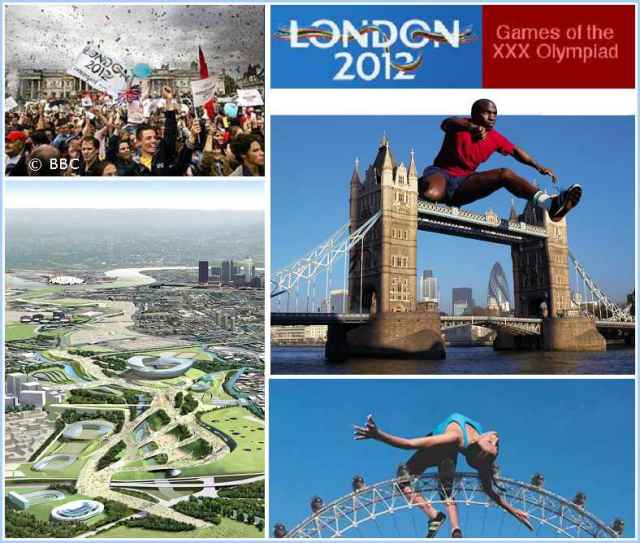
Immediately after the Closing Ceremonies, focus has been put squarely on the London 2012 Games. The concensus is that the spectacular performances have put a ton of pressure on London in what they can come up with. Even the IOC has stated that London souldnt look at it as a compentition to top Beijing's extravaganza.

I just received a email with the response of local British citizens after the closing ceremonies. They are already embarassed and worried about 2012.

"The Chinese did it again the closing was amazing. First class and out of this world. The one negative was the London Show what in the heck was that. In Athens when the Chinese did there welccome to show it was amazing and you knew you where going to get something special in Beijing. I hope that London does better than what they showed to-day."

"It has been a long time that I felt embarrassed for 8 long minutes. I really hope the organizers get there act together for the 2012 Olympics in London, because whether we like it or not the Chinese did a wonderful job from beginning to end. Whether true or false, let us hope the Red Arrows will do a fly past at the opening ceremony in London because that will be something worth watching, unless of course Boris has something up his sleeve to surprise us all."  
-Rose, Bicester

"The Chinese showed their rich heritage and history in a dignified and beautiful performance. Us? We showed just what a farce 2012 will be. Our country's heritage (prior to the last government!) is one to be proud of. We have customs and a richer history than many others. So why are we showing a logo from the 70's (I'm a designer, it's shocking!) and a display of ageing rock, one-hit wonders, chavs and only modern London? I'm proud to be English, but in 2012? I may be moving..."
-Angela, Chesterfield

Good Luck London. My mom and I will be there in 4 years to cheer the Olympics on! 奥运加油!

Monday, August 25, 2008

2008 Beijing Olympics: Rampant Ticket Scalping

My first Olympic event that I went to was the Men's basketball preliminary game between the USA and Angola.

After receiving a free ticket to ride the metro - all people with a ticket to any of the day's event had free access to any of the public transportation, my mom and I arrived at the Wukesong stop.

Before walking over to the beautiful and state of the art basketball arena, we had to walk about 500 yards. In that single stretch, we were constantly approached by ticket scalpers either looking to buy "tickets you were refunding" or to sell the tickets they had just acquired. I personally saw or came across 50-100 ticket scalpers in that general area.

Without thinking too much of it, my mom and I proceeded into the arena to see the game. It turned out to be a wildly entertaining and overall solid performance by the All-Star NBA cast on the "Dream Team 8" or aka "Redeem Team."

A couple of days later, my friend Dave somehow got his hands on some USA v. Greece men's basketball tickets. He said it cost him about 2000RMB (285USD) each. I won the same ticket in the ticket lottery for 100RMB a ticket. That's a difference of 1900RMB or a 20x increase over the face price. That's ridiculous.

I was later told that tickets to the men's basketball prelims were the toughest tickets to get. They were sometimes going for 4000RMB for some games and even 10k RMB to 20k RMB for the China v. USA game. Tickets for the swimming & diving events in the Water Cube, the track and field events, the gymnastics events and all other events that China was supposed to do well were going for crazy prices as well. The primary locations of this included the area just outside the basketball area (where I was) and the subway entrance to the Olympic Green - where the bird nest, water cube and many other venues are.

There was so much extraordinary demand for tickets from Chinese people that these prices were maintained throughout the Olympics. It was a quick way to make money for everyone who did it. Even foreigners got involved. Only after more than 11 days of competition did the police start to crackdown. My Chinese friend explained, "It is soo hard for us to find tickets to buy that we'll buy at just about every price. Can you help me find some tickets?" On August 18th, Beijing police arrested more than 200 ticket scalpers. They placed anti-scalping signs in visible places just to deter further scalping.


It didn't work. On August 19th, when I went to the Bird Nest to watch track and field, I was still approached by scalpers who wanted my ticket. Some were offering 500RMB. Others were offering 1000RMB. The face price was 200RMB. All of them were doing it in front of anti-scalping signs. While I saw a few people being arrested, there were still more than 20 people out there. I thought about selling my extra ticket, but my friend who came along would've been really pissed.

I thought about joining in the scalping fun. The ticketing website, Cosport.com was constantly selling tickets that had not been bought up by foreigners during the initial ticket selling phases. They were offering these tickets to only westerners in Beijing through their online system. No Chinese could buy from them. At the end of multiple tries to obtain tickets - I almost got my hands on 6 tickets for the final swimming event (cost 500RMB that could be scalped for 2000RMB) - I gave up on the pursuit. Those tickets could've paid for my entire trip! I guess that's why so many others were doing it.

Sunday, August 24, 2008

Cultural Captialism: Modern Dance Festival in Beijing

Last week, my friend and fellow Columbia Alum, Gigi, invited me to a modern dance performance in Beijing. I personally jumped at the opportunity since it was almost 2 years since I had been to a dance performance. As we all already know, Shenzhen is lacking in culture.

As Gigi reminded me in a text message: "Modern dance is supposed to play with the idea of free association of body movements and break the rules of traditional aesthetic styles"....blah blah.

The JK booking Dance Festival Beijing 2008 was held at the Nine Theaters in Chaoyang District. had a total of 8 total numbers with 5 different groups from both the US and China. The US participants were Odyssey Dance Theatre from Salt Lake City and Kim Robards Dance from Denver. Their Chinese counterparts included the Beijing Modern Dance Company and choreographers from the National Ballet of China and TAO Studio,

The dance performance was very impressive. The Chinese performances were displayed in interesting cultural costumes and backgrounds. The American performances were mostly in a traditional western context. The Odyssey Dance Theatre even performed "The Factory", a hip hop piece (I was at one point brought onto the stage and proceeded to dance with the performers for a few minutes). 2 of their dancers were even finalists on the American show, So You Think You Can Dance.

At the end of the performance, Gigi and I stayed for the discussion with the various directors. Most people in the audience asked about specific pieces that they enjoyed. What was the inspiration for it?

As a relative novice in art and dance, my question for the directors reflected on a overall view of the development of modern dance in China as well as how it felt have this kind of cross cultural collaboration.

All of the directors responded positively. They discussed the honor of being able to perform together with Chinese groups and the amazing expansion of modern dance and art in China in the past few years. They also talked about collaboration and learning from each other.

The most interesting comment came from Director Derryl Yeager from the Odyssey Dance Theatre. He discussed his excitement for his dance company and the future possibilities for more traveling tours and performances in China. He enthusiastically wanted to do more of these performance festivals in China.

By spending so much time in Shenzhen and Guangdong province, my primary experience has been associated with trading goods and services. This usually revolves around using cost advantages in one place to arbitrage in another. With my education company, it involves giving students the opportunity to experience another place through travel - almost a trading company dealing in people, instead of physical things.

At no point did I ever consider the idea of trading in culture or "cultural capitalism." All of the American directors had the expressed goal of promoting their own group in China. Just as the NBA and the MLB are heavily investing in China to further expand their market, or multinational corporations expanding their operations in China to expand their own market, these dance companies are in effect doing the same. They are using their time and energy to promote their own art.

These dance companies are also proceeding in a similar way as their business counterparts did. To begin tapping into the Chinese market, western corporations began by established joint ventures with Chinese counterparts. This was not only the only way they could get in at the time, but it was the best way to understand how to navigate China. This is almost what this festival was.

Also just as corporations passed on certain technical aspects or management ideas to their Chinese partners, so did the American dance groups show off their techniques and creative intensions.

What is most interesting is that it seems that there are truly a huge number of people who are interested in China's potential other than for business. Collaboration in academics, art, law, sport, society, culture and other areas are just as important as for pure business.