Monday, April 02, 2007

Blackout Shenzhen? Felt Like it.

On August 14, 2003, I was relaxing on the Jersey shore with a friend. I had just come back from 4 week trip in China, and wanted to hang out on the beach instead of clubbing in NYC. Good choice. That day was the day of the NYC blackout. Amazing.

A power transformer had blown in a random power station somewhere in Pennsylvania. That small event led to the collapse of the entire northeast power grid. There was no power from Boston down to Washington and reaching all the way to Ohio.

Thousands of people were trapped in elevators throughout NYC. There were no subways and public transportation wasn't functioning. When I got back home, the news showed millions of New Yorkers commuting home…by foot.

Today I had a very similar experience as the New Yorkers that day…but half way around the world in Shenzhen, China.

6:05pm: I start my commute from the factory to my apartment. The commute usually lasts 25 minutes in the morning and 35 minutes at night (depending on traffic conditions). I’m hoping to get there around 6:45 for my meeting with my landlord.

6:13pm: Arrive at the 沙弯border crossing between Shenzhen suburbs and Shenzhen city limits. The bus is about to start down a 4 kilometer section of a one lane highway. This is usually the most traffic jam-prone stretch of the commute. Since the shoulder is non existent, 1 small fender-bender or one car breaking down creates a really annoying traffic jam.

6:23pm: Travel down the one lane highway is slow but consistent. There isn’t too much traffic and there are no unexpected traffic situations. I’m enjoying the ride since it gives me an opportunity to listen to the most recent Wharton Business School podcast.

6:30pm: We’ve passed the one-lane stretch of highway and have almost arrived at our next stop, 东湖宾馆 (there are no stops on the narrow highway). This 3 lane road is usually where the heavy traffic let’s up and the commute gets faster.

6:35pm: The东湖宾馆 stop is 100 feet in front of us. We’ve only moved 50 feet in the past 5 minutes. The driver refuses to let passengers off because we haven’t “officially” arrived at the stop yet. This is an understandable rule for public transportation to protect the safety of riders. No biggie.

6:38pm: We still haven’t moved. The driver finally relents and lets passengers off since there isn’t any real safety issue with just standing still. I relax in my seat and call my landlord to postpone our meeting until 7:15. I then start listening to an advanced lesson of ChinesePod.

6:38 – 6:45pm: We move 10 feet. I can see the traffic in front of me pretty well. They’re clogged up and not moving either. If people 2 km down the road are not moving, we’re not going to move in the foreseeable future. I’m getting annoyed. I organize my stuff and attempt to get off the bus. I figure that I could just take a cab home from here and still make my appointment.

6:48pm: The bus driver finally lets me off the bus after my repeated requests to open the door. After ignoring me for a bit and saying that I had missed my chance to get off the bus 50 feet ago, he gets annoyed at my complaining and lets me off.

This is the typical Chinese person of power who tries to maintain control over whoever he can. What’s the point of him keeping a passenger waiting on the bus for another 30 minutes without moving? I just don't get these people.

6:48 – 6:52pm: I walk to the closest intersection that flows away from the bottleneck. I try to get a couple of taxis but none of them would stop for me. I get even more annoyed and continue walking down the street to the next intersection.

6:58pm: I get to the next intersection, hoping to see an accident that is holding the traffic up. If I found the point of blockage, I could just walk to the nearest bus station in front of it and get on one of the 10 buses that arrive at my stop.

I don't find it. There’s just more traffic.

7:05pm: Unable to find the point of blockage, I start walking down an auxiliary street, again hoping to find a taxi to take me home. I run back and forth to and from at least 8 taxis, trying to get into one of them.

For some reason, again, none of them will take me. I keep walking.

7:10pm: I finally find a taxi and start trying to go around the traffic. Even though I missed my meeting, I still want to get home so I can relax and go to the gym.

7:12pm: After driving only one km, we are stuck in traffic again. The taxi driver crosses onto the other side of the street to try and ditch in line

All Chinese drivers love trying to get an advantage where there’s a jam by crossing the double yellow lines. The only problem is that this action rarely gives them any real advantage, but it results in the blocking of the entire traffic flow from the other direction. Just beautiful.

7:14pm: My driver turns on the traffic radio station. Interestingly enough, they’re talking about our area being really really bad. On top of that, the hosts couldn't give any reason for why the traffic was so bad today. They explained it as an anomaly where an excess amount of traffic that just converged at the same point. What they did say was to avoid this part of the city and stated how all the auxiliary roads were blocked as well since everyone was trying to find detours.

This was not just an ordinary traffic jam. This has become a systematic deterioration of the Shenzhen transportation system that has affected half of the city.

7:17pm: I cut my losses and get out of the taxi. I start walking again.

7:20pm: I arrive at the next major intersection. Traffic is completely clogged. It looks like what happens in the movies where the lights of an intersection suddenly all turn green. Bad news.

7:30pm: After looking around for a bit, I find another cab to take me down, what I think is an ok street.

7:33pm: I’m stuck again in traffic. This time I only went 0.7km. I guess I’ll never learn.

7:35pm: I get out of the taxi (again) and start walking (again). Screw it; I’m walking all the way home.

8:12pm: I finally get home. J

Quite a journey. I spent a total of 30 yuan and 2 hours and 7 minutes on a commute that should be 3 yuan and 35 minutes.

When I was walking home, I had a interesting time thinking about some of the issues going on:

  • Damn you Random Chinese Roadside Construction! You were definitely an accomplice today.
  • I wish I had a bike or motorcycle. Shenzhen has outlawed motorcycles and has discouraged bike use (by building a city without bike lanes). Even so, everyone with a bike got to where they wanted to go today.
  • Chinese people are impatient in traffic. When I was walking home, I came across a bunch of bus stops. The people there were waiting patiently for buses that were never going to come.
  • This is only going to get worse. As China continues to modernize and grow its middle class, more and more people will start buying cars. The abundant amount of new (and sucky) drivers on the same amount of urban roads is going to kill traffic.
  • Although the situation today in Shenzhen wasn't as involved, it still shared many similarities as the NYC Blackout of 2003. It felt like chaos.
  • Modern technology is of utmost importance in today’s culture. People are more dependent on technology than ever before. I don't know how I would live if I didn't have my cell phone for a week not to mention a city-wide or nation-wide blackout.
  • I wonder if there would be real life examples of the world in Independence Day, Deep Impact or A Day After Tomorrow. Actually, there have already been many isolated examples of this. Look at hurricane Katrina’s effect on the New Orleans area, the carnage of the Asian Tsunami or the river poisoning of 松花江 last year that left Harbin, China (where I was born) waterless for more than a week. Human and nature-created disasters are here.

I had a bunch of friends who experienced the NYC Blackout. They said it wasn't too bad. I don't know…I just hope my elevator works when I wake up tomorrow for another commute.


Friday, March 30, 2007

Arguments @ the Factory

I truly believe that we have a good and decent atmosphere of professionalism at the toy factory. Mostly all of our employees try to work as a team and coordinate a lot of things with each other (This is called配合 peihe.) Although there might be some conflicts that come up from differing points of view, everything is done on a cordial level.

That being said, in the 6 months I’ve worked here, I’ve witnessed many big arguments in the office, while only participating in 1 of them. Although I would say, it’s much more interesting to be in the argument; nevertheless, they are extremely interesting to observe as well.

Arguments:

  • They involve at least 2 people to as many as 4 people.
  • The people involved are all high-level managers who are at least a department head, both men and women.
  • They start quiet and end loud…really loud.
  • They usually involve one or more of its arguing parties making outrageous comments like: Do you want me to jump off a building?...Because jumping off the building wouldn't get it done any faster. (I heard that today) And… I could do it faster if I were blind and mute. What disability do you have?
  • They can start in a flash, and can take place anywhere and everywhere in the office.
  • They have a halftime. This is when one of the parties attempts to walk away. After a 5 second break in the action, either the person leaving turns back, to continue the argument, or the person being left chases the person leaving to continue it.
  • The employees within hearing distance of the argument don't move. They are basically invisible and don't react at all to it. No one looks, no one talks. Everyone is quiet and steadfast.
  • The people who are above the arguing parties don't say anything either. They don't get involved at all.

I seem to be the only one who visibly recognizes that an argument is happening. And since my department is in my own room, I tell my secretary to close our door to the outside whenever I hear it escalating. To me, there’s no reason to get upset at work anymore…and I’ve been in the work force for only 6 months. Come on, it’s work.

Although I have never actually worked at an American company (I’ve only interned at companies), I would assume I would never see the same type of arguments in a US office. They might happen in the board rooms, or behind closed doors, but never in the open as they are here.

From what I remember of all of the meetings I had in college (from the clubs, groups, classes and fraternity), that NEVER were there people raising their voices. Everything was kept at a comfortable level. If any disagreement escalated to a high point, they would be immediately dissolved by the other people in the meeting, or by a superior. That definitely doesn't happen here.

I wonder what will happen when the current employees (who are patient and quiet) are put into managerial positions. Will they act the same way as managers do? Or Will they be less aggressive (as they are now)?

There are definitely more questions to ask, but I really need to get back to work...or else someone might start an argument with me.

Tuesday, March 27, 2007

Business Ethics @ the Factory

It’s been 6 months since I started working at Toy State. Theres been highs, there’s been lows. However, today was the first time I felt disappointed in the ethics of how we conduct business.

Our company is a well-functioning, comfortable and has definitely a western feeling. People are relatively friendly, able and professional. The office is bright and clean (There is a strict no-smoking policy, unlike a lot of Chinese companies). People are treated with respect and the company, in general, cares about its employees. We’ve had numerous company dinners and retreats for our employees. We pay our workers more than the similar companies around us and have even constructed a brand new cafeteria building to make sure our workers eat in very clean and sanitary conditions. Although the company is far from perfect, it most definitely tries…which is good.

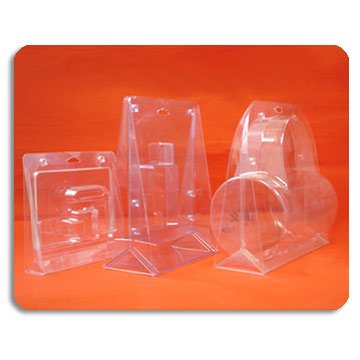
Every new project that we work on has specific packaging requirements. While a large amount of our toys are shipped in boxed packages, a growing amount of smaller toys are being packaged in plastic hanging packaging called “blisters”. Since it is my responsibility to arrange the packaging, I need to help implement the blister designs that our marketing team gives me. This means I need to work with a variety of blister companies.

When I started 6 months back, all of our prototype blisters sucked. They were dull, thin and generally, looked bad. In addition, the blister engineers that made them were rude, not attentive to details, and slow in their prototypes. We had a very bad working relationship, and every blister-making process was filled with annoyance and frustration on both sides.

After a while, we were able to find a new company that made blisters. After a few instances, we noticed that this new company was much better on basically all aspects. They were nice, professional and knew what they were doing. They were quick and efficient with their prototype development, and could basically meet any deadline given to them. Most importantly, their blisters looked good…like production quality.

For the past 3 months, we have been working with this new company in creating samples of all of the new toys we’ve been developing. They’ve been helpful, cooperative and a good partner to work with even though we haven’t given them any real orders or business.

Finally, in the recent weeks, we’re finally going into production on a major new toy we’re making that a lot of US retailers picked up. It was a great chance for these blister company to finally reap the rewards for their constant and consistent efforts for the past few months.

Just before we go into production on any new toy, we go through a process where the engineering department reexamines our packaging to make sure that they will pass all of the various safety and drop tests needed to make on it. In this process, it was decided that we would not use the current blister in production and we would need to redo it.

What made everything suck was that a different company was chosen to make the new blister arrangement. Now, this company was getting fucked over. After 3 months of hard work, they received no real financial benefit from our company. In addition, they were pushed to the side on a project they’ve worked on since the beginning. Blah.

I tried to fight it. I tried to convey how good these guys were and how important they were to my department in regard to our packaging efforts. It didn't matter how many people I talked to. Nothing is being changed. There are some hidden stuff going on... i dont know what.

However, what it means is...not only is it going to be that much harder to meet my deadlines but we just screwed over a great company that’s been the best for a long time. They even gave me a nice calendar for the Chinese New Year.

AaahhhHH!! This sucks.

Monday, March 26, 2007

Shenzhen TV is also talking about Melissa Theuriau

Shenzhen not only has installed LCD monitors in its Taxis, but also have installed 11” LCD monitors in city buses as well. Mass media and marketing is spreading everywhere.

On my commute today, I saw something interesting being reported on Shenzhen Television Channel 1’s daily news broadcast. In an amazing display of the fusing of online media and traditional television, 深圳电视一台 was doing a report on the popularity and beauty of French reporter, Melissa Theuriau, online. Theuriau is a popular anchor in France that has been worshiped for her looks. The compilations of her reports on YouTube.com have nearly 1 million hits. Amazing popularity.

Shenzhen TV gave Miss Theuriau not only a 2 minute feature that included pictures, videos and quotes from various blogs. There was also extensive commentary from the news anchors, celebrating her complexion and skin color. Awesome.

Although some interesting stories discussed online should be brought over to traditional media, random mass-culture centric television reports from the premier Shenzhen TV news channel is just awkward and unexpected…especially on a subject matter relatively far from China. I guess there are just not that much interesting stuff going on in Shenzhen today.

Well, I guess she is incredibly hott…

ESPN's take on the 2008 Beijing Olympics

ESPN.com’s Jim Caple recently published an article on ESPN.com called Beijing or Bust — Beat Olympics Traffic, Get Here Now, regarding the upcoming Olympics being held in Beijing in 2008.

One of the interesting things Caple mentioned was about the reason behind the quick and ahead of schedule construction on all of the venues.

After he described the various different attributes of China’s preparation for the Olympics. Caple started on the incredibly fast transformation of Beijing’s skyline:

How fast is Beijing changing? In just my two days there, the building next to my hotel was condemned, torn down, replaced by a 10-story Starbucks, then torn down again to make way for a 50-story Best Buy. I'm exaggerating, of course. The Best Buy store will be in Shanghai.

…and then the “awful” and increasingly worse traffic situation:

Taking a ride out to the Great Wall, we hit some of the worst traffic I've ever endured. I counted eight rows of cars clogging a highway that had only six official lanes, and we were all being funneled into a mere four lanes. Worsening the choke point was an accident blocking one of the four precious lanes.

You know that opening scene of "Office Space," during which Peter is stuck in traffic and notices he's being passed by an elderly man with a walker? This was worse. In 20 minutes we crawled perhaps one kilometer. And all the while, my driver squirmed in his seat and listened to the Mandarin equivalent of Rush Limbaugh. I have no idea what the broadcaster was saying, but he sounded so angry I can only assume he must have been bitching about the traffic.

I definitely recommend this article as an entertaining piece from a not-so-jaded American’s time in China. It’s a quick bit of what China’s about.

At the end of the article, Caple described something in Guangzhou that I had already seen in Shenzhen, and wrote about it in Cab Advertising:

In addition to being very inexpensive, cabs in China (at least in Guangzhou) sometimes come with flat-screen TV monitors in the back seat. As I rode in from the airport late one night, I watched a news report gleefully showing members of the Taiwanese parliament throwing shoes at each other during a heated session. I could just imagine the commentary: "See? This is what the imperialist running dogs give you with democracy. We can give you the same thing just by opening up a Nordstrom's." It is also a very strange feeling to be riding through Guangzhou at six in the morning and watching a replay of Fish-O-Mania XIII.

I guess these LCD Taxis are spreading…