Showing posts with label globalization. Show all posts

Friday, December 19, 2008

Shenzhen: The Posterchild of China's Economic Development

Yesterday while riding back to my apartment on the bus after Thursday night basketball with team 老外 (Lao Wai), I saw a new report about China's government meeting to commemorate the 30 year anniversary of the opening up policies of Deng Xiaoping. In these 30 years, China has gone from a tremendously poor country to the world's 3rd highest GDP. It's no doubt been quite a transformation.

In this time of celebration of the opening-up policies, Shenzhen has been on the forefront on the conversation - a figurehead of sorts of China's transformation.

Recently, I have been looking for a new apartment in the downtown area. Here is a view of the Shenzhen skyline from one of the places.


Here's a CNN video discussing change in Shenzhen:

Sunday, October 26, 2008

Shenzhen's Greater Plan: No Manufacturing, No Problem.

There has been a recent plethora of news regarding the effects of the global recession on the Chinese export industry, especially in Shenzhen. Many articles have been devoted to bigger factories that used to produce toys, furniture, other consumer products while employing thousands and thousands of workers closing down. One even says it will cost the Pearl River Delta area "millions of jobs".

In reality, this situation has been going on for a while now. The downturn in the US economy many months ago changed the dynamics of manufacturing. With changes in regulations and demands, rising RMB vs. the Dollar exchange rate and other factors, previous factories that employed 100-200 workers couldnt maintain cash flow and pay for their workers.

While talking to managers at plants, some said that it was better for them to go idle than to manufacture something because the things they made was almost always at a loss. Other factories didnt even have the convenience of deciding to manufacturer or not. Once booming factories couldn't get any new orders from their clients in Europe and the US. No orders = no work = no jobs = plants closing down. Fast forward to the present and we see factories with 2000 workers collapse. That's intense. I've seen recent stats that more than 50% of all toy companies in Shenzhen have closed down.

The thing is, as much as this economic downturn in the globalized economy has hurt a lot of export-driven businesses, and its workers in Shenzhen, it's really helping Shenzhen transform itself to what it wants to become. For the past 2 years since I've been living here, there has been a constant trend and push by local officials to develop Shenzhen as a city dominated by high-tech research rather than lower value-added manufacturing. It wants to go from labor intensive, basic and easy things like the toy industry to industries higher on the totem pole of innovation.

As much as Shenzhen was able to get its start from being that factory town "across the border" for Hong Kong businessmen, its goal is to move away from that persona into an international city of something other than toys, eye glass frames and furniture. It wants to be a city on the same scale as Beijing and Shanghai, or better than Singapore.

So while Shenzhen has slowly tried to shed its own manufacturing persona (these are well documented and that I wont go through), it has done many things to promote innovation, whether its opening a office in NYC or being ranked a leader of innovation in Asia in a recent study. Other things include:
  • Establishing favorable policies for high tech industries - this includes lower taxes and cheaper office buildings (among others)
  • Attracting more and more Chinese people back from overseas, whether its recent graduates or seasoned professionals and intellectuals.
  • Maintaining a high education work force. Supposedly more workers in Shenzhen have advanced degrees than any other city in China. I'm sure most of these are in fields of engineering, mathematics, ect.
  • Increasing its financial clout. Shenzhen has developed the Nasdaq-style exchange for SMEs (adding to its current Shenzhen Stock Exchange) while more and more investment banks and financial companies are established here.
  • Promoting greater cooperation with Hong Kong (which is definitely an international city). This work might culminate into a "mega city" metropolis of 20 million people that combines both cities.
  • Investing in an amazing, state of the art Terminal C at Shenzhen Airport.
  • There has been recent emphasis on art, music and culture in the predominantly money-hungry and business rich environment.
  • Focusing on the legal industry. Peking University recently opened a regional campus in Shenzhen as the 1st American-type law school in China. They even invited Justice Anthony Kennedy from the US Supreme court to give the Keynote at the dedication ceremony.
Shenzhen already can be considered one of the most expensive Chinese cities and its development for the future looks bright. Even with the global economic downturn, UPS has just started construction on its new Intra-Asian hub in Shenzhen and it has been ranked 10th on the list of "most powerful emerging cities in the world."

I don’t think anything will stop the development of Shenzhen into the international power city it wants to become. As long as there are no unforeseen problems with the unskilled laborers who have been getting laid off at factories. If you want to get in on the Shenzhen story, better buy a house now before the prices start going up again.

Monday, October 06, 2008

China Mostly Immune to Global Financial Crisis

For the past few weeks, I've been engrossed with the current US election. As a person who has volunteered for campaigns, canvassed in low income neighborhoods and helped register people to vote in the US, it has been an interesting election season so far.

The main issue this year has been the economy and the current financial crisis affecting the world. As a friend who works for McKinsey Consulting told me more than a year ago... "it'll be really really bad. Just wait, Mike." I guess he was right. Another one of my friends who used to work for Lehman in Hong Kong is looking for a new job.

(Yep, the Dow Jones just went under 10,000. This is getting even more crazy.)

What's great news in China is that the main Chinese banks are largely unaffected by the crisis plaguing the rest of the world. It seems that Chinese leaders didn't really understand financial derivatives back a few years ago. Since they didn't understand them, they didn't invest in them. This act of conservative and cautious investing has greatly benefited the Chinese economy. Even though the Chinese stock market has taken a hit - as have just about everyone, the "robust" Chinese economy is said to be able to muscle through while the rest of the world struggles. - CNN.

I guess I'll just have to put my Bschool plans on hold and stay in China for a little longer. It's really the only place where there are jobs.


Sunday, September 14, 2008

Shezhen Investing $200 Million in Vietnam

For the past year a lot of factors have been hurting Shenzhen factories manufacturers.

1. Huge increases in the cost of commodities, from plastics to iron and everything in between
2. Inflation in China
3. Appreciation of the RMB - making products less competitive when exporting to the US
4. New worker standards in China = higher wages for the same jobs
5. The inability to pass the rising costs to the clients overseas
6. Tax breaks and customs tax rebates to Chinese companies exporting internationally have been repealed

All of these factors have severely hurt once profitable businesses into lagging money-losing enterprises. The owner of my new apartment i'm renting in Nanshan is a part owner of a factory who does business with western clients like Walmart. He said that every month he loses 400,000 RMB on workers salaries and factory overhead costs. However, if he actually worked on any orders, his loses would INCREASE to 600,000 RMB. He loses money if his factory makes product. This means that the factory stays idle while he and his partners look for new sources of income.

In the west, companies are already exploring other sources of low cost labor. Vietnam is supposed to be the Next Guangdong province. A lot of foreign companies have already left China for greener pastures in Vietnam. Realizing this trend, Shenzhen is taking action. In a recent Thanhnien News article, Shenzhen is reportedly investing $200 million in a economic trade zone.

The park, 125 kilometers from the Vietnamese capital, aims to attract 170 Chinese manufacturing companies in the clothing and electronics industries to take advantage of the country’s cheap labor and the government’s preferential policies and tax incentives...

So it seems, not only are western companies leaving Shenzhen for more inland provinces and other southeast asian countries, so are Shenzhen factories themselves. Maybe in a few years, the same factories will be doing business with the same clients only in Vietnam instead of Shenzhen.

Monday, May 26, 2008

Shenzhen Democracy

For the past 30 years, Shenzhen has been the big Chinese experiment on capitalism. This Special Economic Zone started from a fishing village to become the most modern Chinese city. Not only is the economy in the forfront, but the rule of law, transportation and civil systems are among the best in China. There has even been talk about a Shenzhen - Hong Kong mega city in its future plans while the development of Shenzhen's airport has been mentioned in Kanye West's blog.

This big experiment seems to be ready to expand to politics as well. Reported in the Pakistan Observer, Shenzhen's steps Toward Democracy describes the future development of an“intraparty democracy.”


The Shenzhen local government published a draft of a document titled “Shenzhen Future Reforms” on its Web site for the public to comment upon . The draft summarizes tentative plans for political, administrative, economic and cultural reforms in Shenzhen and describes 19 key tasks, including the holding of mayoral elections in Shenzhen when “conditions allow.” Members of the regional National People’s Congress will be allowed to run directly in these elections.

By conducting China’s “intraparty democracy” experiment in Shenzhen, Chinese President Hu Jintao is paying homage to the legacy of Deng Xiaoping and signaling that if the test proves successful, intraparty democracy will spread to the rest of China.

The document is a result of the National People’s Congress in March, when “intraparty democracy” the Chinese Communist Party (CPC) version of “rule by consensus” was put in place as one of the key planks of Chinese President Hu Jintao”s legacy. The groundwork for the Shenzhen experiment originally was laid in March when Wang Yang, secretary of the CPC’s Guangdong Provincial Committee, visited Shenzhen and officially announced that the city would “set an example for the nation.” Such initiatives have been tried at the village level before but never in as large or as prominent a city as Shenzhen.

Long a showcase for new ideas from the center, Shenzhen was one of the original sites of Chinese leader Deng Xiaoping’s groundbreaking economic, political and social reform programs and was home to China’s first special economic zone. By formally launching China’s intraparty democracy experiment in Shenzhen, Hu is paying direct homage to Deng’s legacy and signaling that if this test proves successful, intraparty democracy will spread to the rest of China. The province of Guangdong has never built the political power base that Shanghai has, so this latest spotlight on Shenzhen does not signal an impending central government “crackdown” on disobedient local officials.

Beijing wants to build some sense of accountability in the prevailing system and emphasize that the party and government are owned by the people.

I have been recently been considering leaving Shenzhen, but I might just have to stay a little bit longer to see these things happen firsthand, undercover.

Wednesday, August 29, 2007

Inside the toy recalls: Mattel's sins

It's been a few weeks since the Mattel toy recalls first started. Since then millions of toys have been taken off the shelves all over the world, a Chinese factory owner hung himself and the "Made in China" name is being dragged through the dirt in the US media.

Just about everyone in the US has jumped on the hating. There have been countless examiniations into the saftey of everything China makes and an unseen fervor has developed. Democrats and Republicans alike are attacking China as the now "irresponsible" global production machine.

While I can not make any statements regarding food recalls or underware, as a person who has worked in the toy industry (my job was to liason between the factory and the US design staff), I see this situation really clearly:

It isnt really the Chinese company's fault!

During the design process, there are a lot of considerations for safety. Only certain materials could be used for certain aged kids and the spacing between motorized parts had to be a certain width. Above these basic restraints, all of our toys had to pass a RoHS standard. This applied to the entire packaging, the paint, the materials used, the parts, everything. Before being able to ship any toys, we had to submit them for testing at a hong kong third party. Only with certification from this third party could we ship to Walmart, Target, ect.

In order to pass these tests, we had to control our supply chain. Every shipment of materials were individually checked by our on-site Quality Control team. If anything was wrong with the shipment, the QA team would not accept the entire stock and demand the sourced company to redo it.

In essance, there were atleast 4 different levels of quality assurance: During design, supply chain, manufacturing and third party testing before shipment. Of course not all shipments were perfect and things did slip through the cracks, but no products were recalled when I worked there. None.

So with my own first hand experience, I was terribly shocked when I heard of Mattel's recall. How could the biggest toy company in the US allow so many millions of toys be shipped? What happened to all of the different layers of testing and retesting. Also, why didnt the US media find the real reasons for the problems instead of making China the scapegoat?

Well finally, someone did. Only in today's NY Times has there been any mention of the innate problems within Mattel's business.

Mattel has been manufacturing in Asia far longer than many companies (the first Barbie was made there in 1959). That led to long-term relationships with certain Chinese contractors, many spanning decades. Paradoxically, that appears to have contributed to Mattel’s problems: the longer it outsourced to a factory supplier with good results, the looser the leash became.

During Mr. Eckert’s tenure, the company has scaled back the number of companies it uses and the fraction of Mattel toys that they make, but it allowed its more reliable suppliers to do their own regular toy testing — with spot tests by Mattel only every three months.

The two contractors that caused this month’s recalls were among the most trusted. Lee Der Industrial, the supplier involved in the first recall, had worked with Mattel for 15 years. The Early Light Industrial Company, the contractor that made the Sarge cars in the second recall, has supplied toys for 20 years.


Mattel became so confident in their China production that it basically gave all control to their subcontractors. Instead of making sure they had final say of what toys were being shipped, the left it up to their Chinese counterparts. What responsible company would decide to do that? No smart company would ever think of giving all control for their products to someone else.

Still Mattel execs want to refocus the blame on the Chinese:

“I think it’s the fault of the vendor who didn’t follow the procedures that we’ve been living with for a long time,” Mr. Debrowski said.

I guess Mr. Debrowski has never worked in a Chinese factory (like I have). Maybe if he worked there for 2 weeks, he would see that Chinese employees need constant attention. Only micromanagers with attention to detail can actually confirm that any processes are used. Without this oversight, any "procedures" are just random words on paper.

All in all, the real issue is money. The real reason why Mattel gave so much autonomy to their contractors was because they wanted higher profits. In order to have their own staff oversee and manager the production, QA and other processes, it would cost Mattel much more money. Instead, they calculate the cost and overhead of the Chinese manufacturer, add 15% for the Chinese company's margin and not worry about anything else. For a toy that costs the Chinese company $1.20, Mattel sell it for $4.50 to Walmart. That's quite a profit.

Whey they're making that much money, who cares about a little lead in the paint?

Ultimately, no one is really blaming Mattel for this. If you read the NY Times article, you can see that the underlying tone of it is pro-Mattel. Even the title, After Stumbling, Mattel Cracks Down on China, shows the bias.

The US (and world) media will continue to attack China while the real culprits enjoy their high profit margins. I guess it's just another symptom of globalization.

Wednesday, August 15, 2007

China & Morality

One of the most interesting things about living in China is the underlying sense of morality.... or the lack there of.

From my time living here, I really believe that anything and everything can happen. Although the vast majority have a decent sense of what's right and wrong, a lot of people clearly don't have it.

Business ethics? Who cares.

Insider Trading? Common place.

Cheating for self gain? Standard.

One recent event that shows the turbulent and frequent questionable nature of what is real/fake and right/wrong occurred in journalism.

The west often accuses Chinese journalism as censored, government approved and basically propaganda. Although everyone and their grandmom knows that there is a natural sensitivity for the government on certain issues (like falonggong, protests) on the national scale, journalism on the local level is more open than I had previously thought. There are definitely news reports, on the radio, in TV and print describing corruption, crimes, and other unsavory events. Although there is a vail lifted over the average Chinese person, it's not as thick as everyone thinks.

Well, about a month ago, a Beijing journalist described a very interesting story about food vendors putting cardboard and other undesirable materials into food. This scary story caused a stir in local and national headlines and was quickly picked up by CNN international sources.

The whole country was in outrage. Police and health inspectors started checking everywhere. Foreign press lamented and criticized China, ect. ect.

And all the while, the story was fake...

As CNN reported through Reuters:

Beijing police have detained a television reporter for allegedly fabricating an investigative story about steamed buns stuffed with cardboard at a time when China's food safety is under intense international scrutiny.

Beijing authorities said investigations had found that an employee surnamed Zi had fabricated the report to garner "higher audience ratings", the China Daily said on Thursday.

"Zi had provided all the cardboard and asked the vendor to soak it. It's all cheating," the paper quoted a government notice as saying.

After I read the original report, I spent a while thinking about the stuff I put into my body every morning before going to work. I also thought about the other crap that could be in the foods out there. I was almost freaking out.

So while I, and many other people were freaking out (like me), while the whole country was in outrage investing food processes, standards and regulations, and while the international community criticized the Chinese government and its standards as another example of inept corruption of the "communist regime," the story turned out to be fake.

So, creating this panic and international incident was just a chance to get higher ratings, and a future promotion. Wow.

This is China.

The reporter has since been tried and sentenced to 1 year in jail and a fine. Good times.

Before leaving this topic, there is another issue that is involved here. I would not be surprised if the story was true and the reporter was telling the truth. Instead, the culprit could be the authorities who are trying to damage control. Different agencies could have ordered that the reporter be the scape goat so that the government could deny these accusations with more footing to foreign trade partners... what if...

Ultimately, no one knows what the hell is going on. It doesn't matter if you believe one side, or the other. They are all playing with the same, cheating deck of cards.

Monday, August 13, 2007

Sex and China

A couple of weeks ago, I was with a bunch of friends and cousins at KTV place in Shenzhen, singing kareoke. Although I dont do that much singing (i'm a drinker at these things), I did notice something very interesting.

In between when songs are played, there are different ads and commericals displayed on the monitors throughout. These are usually promotional material for various drinks or cars. However, one really stood out to me.

It was a 10 second ad that featured, what I thought, was a cartoon figure shaped like a condom with disclaimers. At first, I didn't really understand it, but after conferring with my Chinese cousins, I figured out what was going on.

It was an ad for condom use and awareness for HIV/Aids. The ad basically wanted everyone to use condoms, and stated that the KTV places would distrbute them for free to any of its patrons.
Wow, I thought... some KTV.


So, it looks like it's working.

When issues of human rights, politics and censorship comes up to westerners, many use the argument that more trade with China will not only open up the country and its 1.3 billion people as consumers, but also help change the society and culture with it as well.

Well, i guess its partly working... in the form of a mini sexual revolution.

By no means am I refering to a trend that more people are having unprotected sex with a side of drug use (like in the American 1960s). What I am seeing is the quick and rapid development of a more open understanding and acceptance to sex and human sexuality.

A recent International Herald Tribune article entitled "A People's Sexual Revolution in China", describes the current explosion of sexuality in media.

Even five years ago, mainland books and magazines were banned from showing pictures of scantily clad models or publishing content that was deemed offensive or morally corrupt. The only sexual content to be found was in sex education pamphlets or books of nude Chinese women sold as "art works" at big city airports.

Today, however, with the Chinese economy booming and the government loosening its hold on the personal lives of everyday citizens, magazines are beginning to publish soft-core pornographic photographs, sexual fantasies and even clues about where to pick up call girls.

This change in sexuality has also been seen in the governmental policy towards HIV/Aids and condoms.

A few years ago, there were very few places where condoms could be bought. The Chinese government also denied the existence of HIV/Aids in China as well (kinda like the Reagan years in the US) Fast forward a couple of years and condoms can be bought everywhere. In every supermarket and convenience store, condoms are displayed and sold at the cashier next to the Peanut M&Ms. Recent reports by Reuters confirm that various government ministries have

has ordered all hotels, holiday resorts and public showers to provide condoms, part
of nationwide efforts to fight the spread of AIDS.

What I originally thought of as a progressive KTV place being responsible for its patrons has actually turned out to be a nation-wide campaign that not only helps prevent STD/STIs, but also, in a sense, further liberalizes and modernizes Chinese conceptions/stigmas regarding sex and sexuality.

Good job, China. Keep up the good work.

Wednesday, August 08, 2007

Chinese Firing @ the Factory: Power to the People

Since I’ve been working here in Shenzhen, there have been a lot of people that have been fired. While I haven’t yet witnessed the firing processes in American companies (for myself), I think I have a good idea of how its handled and the necessary customs. In my experience, the Chinese process is…let’s just say, different.

As I’m writing this my secretary is in the process of cleaning off her desk and gathering her personal belongings. The head of the R&D department just fired her at 8am on Monday right after she came in for work.

To tell you the truth, I never really liked my secretary from the beginning. Although she was a smart girl and proficient in computer work, she was lazy and forgetful. It seemed like that she was always sitting at her desk (which is right in front of me), doing nothing while other people were running around. She had no initiative in doing anything. I personally would have never hired her (but our hiring process for my department sucks too).

From my sideline view of this current firing, and other ones previously, I have noticed 3 distinct parts: the before, during and after.


The Before

Before a person is informed of his or her firing, everyone else in the office already knows. It spreads like wildfire. Before my secretary was fired, there were mummers of it for the previous week. “Oh, the manager 马上要赶走她,” my costing engineer whispered to me a few days ago. All of this is talking is done quietly in the background. People whisper the info back and forth until just about everyone knows. Well, everyone except the person getting fired.

In reality, it is pretty well known who is going to be fired a long time before it actually happens. For subordinates and lower ranking members of the staff, their fate is always controlled by their boss. If the boss doesn't like you, there is a good chance that you’re going to get the ax sometime or another. The only complication to this is that sometimes your boss does not have the authority to fire someone (like me). So when my previous project engineer, Thompson, was fired in December, I had no say. Instead, my boss did it. He didn't consult with me or any members of my department on anything. He thought that Thompson sucked and needed to leave… so he acted on it. Simple as that.

For higher-level managers, the process is more secretive, but just as clouded and immediate. Just a couple of weeks ago, the 2nd highest ranking person at the factory (who was in charge of all of the production) was let go. Her firing was a surprise to many of her subordinates, but not to the higher ups. I had heard a conversation between the owner and COO about the possibility that she was “skimming off the top” more than 5 months before the event. That’s a long time to be working when your boss already knows you’re going to be gone.

Although there are “justified” firings, most are just a play for power. Anyone and everyone is expendable at any given time. No reason needed. The thought of what is right and wrong goes out the door. Power is the only thing that matters.


The During

After a person is informed that he/she was fired, he/she are immediately on an island. It doesn’t matter if it is the highest manager or a low subordinate; everyone is somewhat frustrated, embarrassed and quiet. No one talks to the person getting fired.

In reality, what does one say when they’re friend was just let go and told to clean off their office? I don’t know. Instead of getting involved with the person and having compassion, everyone goes right back to work. The person that was fired is left to his/her embarrassed/shocked/angry state before going to HR to collect their pay before they officially leave. It is a miserable time.

This process of collecting one’s stuff and filling all of the paperwork takes atleast 2 hours. Due to the extended time this takes, in some instances, the fired person’s replacement is already on the job before he/she leaves. That’s just not cool. Not only does the company blindside you, but they’ve been preparing for it for a while. That’s the only way they have your replacement all ready to go. Awesome feeling.


The After

After the person officially leaves everyone basically returns back to normal. They start talking again, reminiscing about the firing process and how the company sucks for doing what it did. They talk about how just or unjust it was. This standard tradition is always in the form of shallow whispering.

Almost immediately after the person leaves, a notice is sent to all relevant departments, informing them that certain processes (that the fired person was in charge or apart of) will be altered. There is no fanfare or nostalgia from the company. Business as usual.


As a partial observer of this always ongoing drama, one thing has always bothered me. 65 years ago, the communist revolution in China brought power “to the people.” The proletariat and the peasants got all the power from the oppressive and corrupt land owners. How is it that now, in a still “communist” society (whatever that means), the people at my factory, have no power… or any semblance of power.

There is no collective action or unionization. There are no negotiations for worker’s rights, wages, benefits and working conditions. There is only silence.

Whenever someone is fired, no one speaks. Even if their firing was an awful display of corruption in the most unjust manner… nothing.

Just silence.

A few days later, 2 guys in the prototype department were let go. This time, it really did come out of the blue. No one knew what was going on. They were called in, and told to leave immediately.

When I asked the rest of the proto department what had happened, they were silent. Each and every person just looked down and went about their business. The 2 guys had been working in that department more than 5 years each. They were great buddies with everyone, consistently going out, eating, drinking, playing basketball and working together. Now they’re gone and no one could (or would) do anything about it.

This is the state of Chinese communism.

Power to the People.

Wednesday, June 27, 2007

Challenges ahead for the iPod & iPhone in the China Market

In college it seemed like that I was the only one without an iPod. Everyone had one. Not only did consumers in the US embrace the iPod, Shuffle, Nano, ect., they also bought up the Powerbook laptops, G4s and now.. iPhones. Everyone.

In China, its a different story. Apple has very little presence here. Although all of its products are manufactured in the factories in Guangdong province and Shenzhen, no one actually has them here. When I have my iPod out on the subway or bus, everyone stares at it. They've never seen it.

What Chinese people have seen are the generic iPods. Since everything is produced here, there are hundreds of small factories and software houses that have copied all of Apple's products. These generic mp3s, and mp4s (with color video capability) have been out on the market for many years. It's possible to get these wholesale for less than $10... and Chinese people have been buying them. Apple and its products have little, if any presence here.

Well, i guess Apple is attempting to change that. In recent months, there has been a significant and growing presence of Apple marketing. Not only are they opening more specialty shops in the most glamorous malls, but they are also putting up ad campaigns on the street.

2 days ago, I also (finally) saw an iPod commercial on Chinese TV. It was the same exact one that Steve Jobs showed off at this year's Apple convention (where he introduced the iPhone)... instead it had Chinese subtitles on the bottom. Good start.


We'll see how the Chinese market develops for Apple and its wide range of products. It's success here is far from certain, however, as many people have discussed the issues of it. A great post on Silicon Hutong called "The iPhone is not for China" has already described a hard market for Apple to tap into. This is probably why a Chinese company has already made an alternative to the iPhone. Only time will tell.

Wednesday, April 25, 2007

Future China/US Trade War?

There has been an abundant amount of coverage on the possible US sanctions towards Chinese goods if China doesn’t appreciate the yuan at a faster pace than it is doing currently. Paulson: China must implement reforms describes current US Treasury Secretary’s view of what’s going on.

Paulson said there is agreement in principle between the U.S. and China on the need for greater yuan flexibility. The discussion is about "the pace" of change.

"They're moving, but they're not moving, in my judgment, quickly enough," he said. "China is by far the largest" economy that doesn't have a market-determined currency, but enjoys the benefits of the global economy."

In a 4/21/07 Bloomberg.com article entitled Paulson Says China Must Yield `Tangible Results' on Yuan, Trade, Paulson described the possible consequences and repercussions if China doesn't act quickly.

"The American people are concerned, Congress is concerned and there's a lot of protectionist sentiment'' toward China, Paulson said in an interview on the ``Charlie Rose'' show on PBS television following his speech in New York." The more tangible reforms we see, the easier it is for me to deal with Congress.''

"There will be some, I believe, unattractive bills that are voted on in Congress,'' Paulson acknowledged. "I think the Chinese are very well aware of this -- I think they should be aware of it.''

Other parts of the Bush Administration have also taken action by imposing import duties on Chinese glossy paper and by filing 2 complaints to the WTO for copyright infringement and piracy.

The feeling of uncertainty in Chinese and US relations changed 2 days later in another Bloomberg piece by Matthew Benjamin. In his story, called Paulson May Be Unable to Get China, U.S. Off Collision Course, Benjamin painted a grim picture if reforms in the Chinese currency doesn't happen soon.

Without steps to allow a significant increase in the yuan, which most economists consider unlikely, Paulson may not be able to continue holding off moves in Congress to punish China.

"After years of talk and bluster, protectionism no longer seems like an empty threat,'' says Stephen Roach, chief global economist at Morgan Stanley in New York. "Trade sanctions against China are now all but inevitable.''

These increasingly real threats come with the backing of Congressional democrats who maintain that they would achieve “strong and effective legislation is likely to pass with a veto-proof margin.”

Although it might seem that the appreciation of the yuan is all but unavoidable, Benjamin also shows the hidden side of the currency struggle, relating both US and Chinese workers and businesses.

When China allowed a small rise in the value of its currency in 2005, Hangzhou food-company executive Wang Yuzhou saw his profits squeezed. Any further move threatens the livelihoods of his 1,000 workers and the 5,000 rural households that supply his plants, he says.

John Walker says China's currency policies have already cost 100 jobs at his Lewisburg, Tennessee, die-casting company. He wants the U.S. Congress to do "whatever it takes'' to force an increase in an undervalued yuan that he contends gives an unfair advantage to Chinese competitors.

Citizens on both side of the Pacific Ocean have money, family and livelihoods at stake. It is often easy for Americans (me included) to jump into the US perspective (of John Walker) while being ignorant of Wang Yuzhou’s plea.

But what can China do other than to appease the US on their currency appreciation wishes? The answer lies in a recent 4/18/07 NY Times article. China Leans Less on U.S. Trade describes the readjustment of China’s global trade strategy.

At booth after booth at China’s main trade fair (Canton Fair) this week, the refrain from Chinese business executives is the same: the American market is not as crucial as it used to be.

Instead, Chinese producers of everything from socket wrenches to sport utility vehicles say, their fastest growth these days lies in Europe, Africa, the Middle East, South America and elsewhere in Asia — in other words, practically anywhere other than the United States.

So it is throughout China. With ample support from the Beijing government — including a flurry of trade missions to Africa and assistance with trade fairs in Germany, Australia or someplace in between — Chinese companies are poised to expand into the markets of many of the world’s rapidly growing economies.

By placing the focus on new markets for the abundant amount of Chinese goods (produced in cities like Shenzhen), Chinese businesses are beginning to hedge their profit margins and risk.

The government and companies across China increasingly see a danger in becoming too dependent on a single market (USA). So they are stepping up efforts to sell to other countries, particularly those outside the industrial world.

This change in direction is a small but important step for China. Maybe in the future, they will not need to be so dependent on American politics and their tariffs.

On the other side: what would happen to the US if cheap Chinese goods start decreasing?

Friday, April 20, 2007

Chinese Radio: Loveline

Every time I go back to the US for a business trip, I’m lucky enough to go home and bring some stuff back to me to Shenzhen. Familiar DVDs, old family pictures and past books have made my Shenzhen apartment feel more like home.

One of the things I’ve recently brought over from the US that I thought I needed is my Alarm Clock/ Radio. I’ve had this thing since I was in middle school and I’ve used it on my bed stand ever since. I’ve definitely felt a void not having it here in Shenzhen with me. Currently I only have my cell phone to tell time and to wake me up in the morning. My clock would do a better job of those 2 functions while simultaneously giving me access to the radio airwaves. Yes.

So after I lugged this thing across the ocean, bought an extra power cord and power adaptor for it, I discover it didn't work. The clock would be progressively slow. For every hour of time that went by, the clock only showed 55 minutes went by. I tried a couple of other clocks and the same thing happened. For some reason, the US alarm clock just can tell time in China (I think it’s a current problem…anyone want to help me fix it?). I could only use the radio.

I’ve been to listening to the radio a couple of nights a week before bed. On top of that, i've had other opportunities to tune in while taking taxis (Shenzhen taxi drivers love talk radio) and on the bus, commuting to and from work. Although still limited in my exposure to radio in China, I have found many interesting things on the air waves.

This interest has made me decide to add a new category to my blog, “Chinese Radio”, in which everything will stem from radio content that I hear.

A few nights ago, I was restless and unable to sleep around midnight. Bored and annoyed with myself, I decide to turn on the radio and hopefully doze off with it acting as the background ambient noise. The radio didn't help. Instead, I grew incredibly interested in a show I just happened to stumble upon.

Imagine a women-specific version of Loveline, Chinese style (without the mentioning of drug use and without Adam Carolla’s antics

At the beginning I didn't know what was going on. I couldn't exactly understand all of the technical language that was spoken. But as it wore on, I got into the grove of it and could understand about 90% of what was being said. I just used context to guess at the last 10%. All in all, the hosts seemed to be enjoying themselves and the subject was entertaining. Here are the details:

  • There were 3 different female voices on the air. I’m assuming one was the host and the other two were experts/doctors.
  • The doctors answered questions on a wide range of topics, including sexual health, physical health, and mental health.
  • The doctors spoke in professional language, and from what I could understand, had a decent grasp of female health issues.
  • Questions were asked in many different forms, including direct calls, letters as well as text messages. There seemed to be a lot of text message questions.
  • The hosts all spoke in very good mandarin.

One of the more interesting calls that came on was from a 26 year old. In a nervous, slow and heavy-accented speech, she asked a question regarding having unprotected sex and the likelihood of pregnancy by using the “pull out” before climaxing method.

The experts calmly explained (correctly) that the “pull out” method was not a good way to prevent pregnancy because there would guys sometime ejaculate semen before actually climaxing (or pre-cum). Instead of doing this, she should either use some type of birth control, including male/female condoms and contraceptive pills. They were very comforting and accepting in their explanation and attitude to the caller.

When the inexperienced girl questioned how she could get the medication, the experts gave her a hospital location in proximity to where she was explained the procedure.

Success! The potential for one less Chinese baby!

Listening to this program got me thinking:

  • I’m actually not surprised that a show like this is on the air. While Chinese people, I would say, are sexually repressed, they feel decently comfortable about it when it’s done in professional and medical terms.
  • The text message questions are a good way to receive questions. Text messages are not only cheaper than traditional phone calls, but they negate the nervousness and awkwardness of the first-time caller. Chinese people might be ok with talking about health and sex, but they’re definitely always nervous.
  • This show is a really good idea for Shenzhen.
    • Population: As everyone already knows, Shenzhen is filled with tons of migrant workers, in which a majority of them are female. (My factory’s assembly line of more than 2000 is 95% female.)
    • Education: Most of the migrant workers are from the countryside and have relatively little education. Most have never been to high school. People often get word-of-mouth advice from just as ignorant friends.
    • Hospitals: Public health services are not keeping up with Shenzhen’s growing population. Also, health care costs are rising throughout the country.
    • Income: Migrant workers are paid relatively little and are saving up for their family. If something is wrong with their health, they often ignore it or try the least expensive treatment possible.
    • Combine all of these together and this show should be a great success.
  • The Chinese listener didn't seem that knowledgeable about the most basic bodily stuff…not just sex. Just about everything that was being asked seemed to be from high school biology/anatomy class.
  • One of the questions was about mental health and depression. I wasn't able to get a good read on it due to the technical language… but I do wonder what kind of training and experience the doctors on the show have on that.
  • I wonder if they have this in other cities. It has to be in the 1st tier cities. What about the 2nd and 3rd tier? It’s definitely a good resource.

Let’s only hope that these girls from the countryside have radios in their factory dorms to take advantage of programs like this. Maybe they should go buy a clock radio and see if it tells correct time.


Tuesday, April 17, 2007

China's Initiation into the World (Cat) Economy

I call it the live-too-close syndrome.

Whenever I live at or near a interesting place, I never take advantage of it. This happened during my 4 years at Columbia University…in which I didn't go explore New York City close to enough…and it’s happening now in Shenzhen. I have such a great opportunity to explore China, Hong Kong, Macao, countries in S.E. Asia…but I’m just not doing it.

This past weekend, when asked to accompany my friend Simon’s wife into Hong Kong, I took a step for exploration. I was committed to go with her to the HKCLS 11th Championship Cat Show.

Yes, a cat show.

I personally don't like cats that much and I don't think they particularly like me. I’m a dog person through and through. I guess it’s just the pack mentality of the dog versus the independent cat. The other reason could be that my family just has an awesome dog, Niuniu.

During our day-long HK excursion, we ate 4 different times (Simon’s wife is pregnant), bought a ton of cat supplies to bring back to China (cat food, supplies, litter, ect.), walked around the streets of Hong Kong and most importantly, went to the cat show.

Held in the B Hall of the Hong Kong International Trade & Exhibition Centre, the show included hundreds of cats. Here are the highlights:

  • Simon’s wife loves Himalayans and has 4 championship caliber cats at home. She recently got first place in shows in Beijing and Shanghai (out of more than 600 cats). With her success, she has been able to build an extensive network in the cat community (how we got into the show as exhibitors). She was in Hong Kong to network with owners of the American Himalayan champion.
  • The show room had about 20 lines of tables set up for cat cages. All of the cages had different medallions and award ribbons on it showing off the caliber of the cat inside.
  • There were 6 “rings” in the middle of the hall where the cats were judged. The 3 American and 3 Japanese judges took great care in their handling of the cats and had their own rubric and evaluation standards.
  • When the cats “competed” in the rings against each other, groups of different exhibitors stood by to watch the judging. While seated by our friend’s cat cages, I would hear periodic applauses when awards were given out.
  • There were a few “world-famous” cats that everyone knew at the show. These cats (with a reputation) were definite locks on first place “best of breed”.
  • Cats were given points for finishing in different places. Cats with more points are ranked higher in the world stage.
  • There are entry fees to the competitions but no prize money. Owners spend thousands of dollars and countless hours on their pets without any ROI.

For the most part, the CAT show was a half-way interesting event. It was very much an insider sport where only seasoned veterans knew the intricacies of what was going on. However, in this mundane, small community of the rich-girl hobby, there were many interesting plots and subplots that developed.

  • There is no real rubric for judging the cats. Personal relationships with judges are a huge factor. Owners would proudly strut into the ring to place their cat into the competition, while simultaneously giving a head-nod to the judge.
  • Location is a big part of the judging too. If a judge graded a cat to be the best in breed at a show in Malaysia, they might change their mind and not place the previous winner in the top 5 when they got to the Hong Kong show. There is definitely home court advantage.
  • The “national champions” who had already won top prizes in the US, Canada and other competitions were locks for the best in breed. No judges wanted to go against a consistent winner that had been judged by numerous other judges previously. That would make them lose all credibility.
  • Newcomers to the community are usually ganged up on and ignored. However, if somehow this person slowly gets recognition and top 5 awards for their cats, they are immediately loved and included. Talk about 2-faced people.

From my point of view, the most interesting part of this cat show community is the sense of competition and how it relates to globalization and trade.

One of the underlying rules of cat shows is that anyone and everyone can enter. There is a popular notion that there should be fair and equal competition for all. This has recently been tested.

In the past few years, Chinese involvement in this hobby has risen greatly. The Chinese nouveau-riche has begun spending tens of thousands of dollars to buy famous genetically strong cats to compete (as registered on the CFA) with the established cats. Even though rules stipulate that anyone and everyone can register for competitions, Chinese cats can only realistically compete in events held in China or South East Asia.

Recent laws regarding the quarantine of pets in United States, Hong Kong and other countries (where the most famous competitions are located) have, in effect, stopped Chinese cats from competing. Stringent documentation of shots, vaccines and immunizations are needed for participation. On top of that, since China is a "3rd world country", all Chinese cats are placed in a 3 month quarantine upon entry. No owner has a realistic ability to wait it out. This means that foreign cats can come into China to compete but vice versa. Above that, if anyone is caught competing with illegally immigrated cats, he/she is immediately reported on by the local participants and effectively banned from the community.

I really believe that the current state of cat dynamics between Chinese and US/Hong Kong/Western Countries shows how the international economic system works.

  • Western society creates a rich-man’s game of notoriety and prestige. (Capitalism and Cat shows)
  • Everyone is encouraged to join in the game in which competition is embraced as part of the culture (free market economy and embracing competition)
  • When new communities begin actively participating in the game and finding success, indirect rules are made to prevent their involvement. (US and European farm subsidies as well as textile quotas and tariffs are a few examples of the “quarantine” in the cat world.)
  • Any violation of these rules comes with immediate consequences of punishment from the game. (WTO sanctions & devaluation of credit ratings and expulsion from the cat community)

In the end only time will tell how the system plays out. In this story, the Chinese cat owner in Shenzhen specifically bought a Hong Kong apartment to house her cats so that she could legally and effectively compete with local cats. She had enough money and desire to achieve that. In the HKCLS 11th Championship Cat Show, she was able to get the highest prize in multiple breeds, finishing immediately under the “national champion” cats. In one year she has gone from the very bottom to the top tier. This transformation has won her "respect" and "acceptance".

It ultimately seems that the system of rules, quarantines and community dynamics is just a fraternity-esque “initiation." Only after initiation can the fresh meat join the brotherhood. We'll just have to see how much hazing they have to endure before getting initiated.

Monday, April 09, 2007

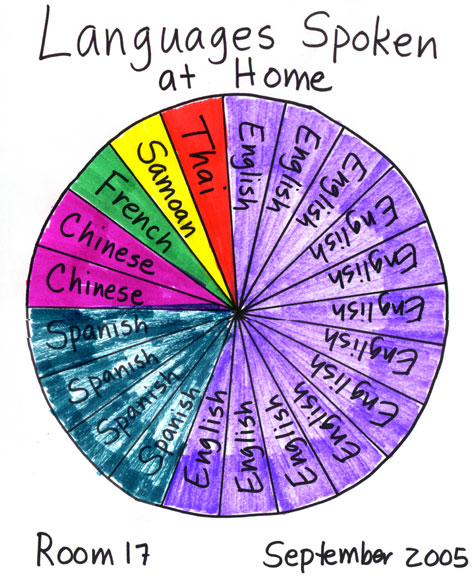
Shenzhen: Diversity in Languages

On my last foray into HK, my friend, Jason, and I were waiting in the Luo Hu customs line. The paperwork usually goes by pretty quick, but for some reason, it took really long this time. So we stood there and exhausted all the small talk we could think off. In the middle of our 35 minutes wait, Jason said something very interesting to me.

“Check this out, there are atleast 10 languages being spoken in these 3 lines.”

This was very true. Since we were in the “foreigners” line going into HK, we were next to people from all over the world (HK is the world’s city right?!). People were speaking French, Spanish, German, Russian, Chinese, Cantonese, ect. It was incredible. What was interesting was also being able to recognize all of the languages being spoken. Although I didn't recognize the content, I could most definitely differentiate the Hebrew from the German.

In general, I consider myself decently knowledgeable about different languages. Here are my stats:

  • I studied French and a bit of Spanish when I went to school. Although my vocabulary has waned, I can still understand it if people talk slow enough.
  • I am a native speaker of Chinese. I have traveled to many parts of China and can understand many of the variations on 普通话 (Mandarin). Although I still need to improve in my reading and writing abilities, I’m slowly getting there. My current gf is helping me with Cantonese, but that’s definitely a work in progress.
  • I am a native speaker of English.
  • I have traveled to many places and have met many different people all around the world. They have spoken languages from Portuguese to Arabic, and from Japanese to Swahili.

Although I consider myself a relatively “global” or worldly person, my language training didn't prepare me for a day on the 106 bus going to work.

It was a Saturday morning and I was going to work for my required half day. I was hung over from the previous night’s partying at UBar (the Shenzhen westerner’s bar). After getting on the bus, I was sitting near the back and trying to relax. There was basically no one on the bus.

After a couple of stops a group of 5 migrant workers got on and proceeded to sit directly behind me. The peace & quiet I was accustomed to quickly became loud rings of conversation. Maybe it was my sensitivity to sound (from my hang over), but the talking I heard came in a deep voice, saying “aiufbhalh gapia lsdkljgi uhrja, aiutaerla gjkd fgak;iu wregiuha.”

What the hell is going on? Why is this guy speaking gibberish?

I quickly turn back and see what’s going on. I see that the oldest guy in the group was preaching didactically to his friends. Everyone was attentive and nodding their head, processing what he was saying. Even after I focused in and concentrated on his voice, I still could not understand. Further yet, I didn't recognize it at all. It was just “wirue, owyqpkdh oiurh (point, headnod). Ihwe oeiu pjkhf woihns woeinf woieu kljsder!”

I seriously could not even recognize that these people were speaking a language, let alone what they were saying. With my extensive experience with languages, I found this “ignorance” fascinating and disturbing.

Here’s what I was thinking:

  • How good are these migrant workers’s 普通话?
  • How come I cant understand a dialect of Chinese? I’ve seen, heard and experienced soo many things in this country. How do I have no ability to even recognize what’s being said as a language?
  • Shenzhen definitely surprises me every single day. This is one reason it is incredibly fun to live in a diverse city. I’ve lived in NYC and I frequently commute to Hong Kong. I just never thought Shenzhen could be as eclectic as these 2 global cities.
  • This is the reason Mandarin is sooo important. Without it, Chinese people would never be able to communicate with each other. Thank god秦始皇 (the First Emperor of Qin) united the country and established the common language.
  • This is definitely the reason why Cantonese is way less important now in Shenzhen than ever before. People have stated that just 10 years ago, it would be impossible to function in Guangdong province without Cantonese. Now Cantonese is just an afterthought. Mandarin rules.

I guess I’m just glad that I can speak and understand two of the world’s most significant languages: Chinese and English. Otherwise I would be most lost everywhere.

Tuesday, April 03, 2007

Shenzhen Development

I recently found a couple of YouTube videos showing Shenzhen development of the past and future.

This first one is an animation of the past 23 years (between 1980 and 2003) Google-earth style.


This one is a personal video shot at a display of what Shenzhen will look like in the future. The description of the video states that all of the buildings are currently under construction. I wouldn't be surprised.


Gotta love this city!!

Monday, April 02, 2007

Blackout Shenzhen? Felt Like it.

On August 14, 2003, I was relaxing on the Jersey shore with a friend. I had just come back from 4 week trip in China, and wanted to hang out on the beach instead of clubbing in NYC. Good choice. That day was the day of the NYC blackout. Amazing.

A power transformer had blown in a random power station somewhere in Pennsylvania. That small event led to the collapse of the entire northeast power grid. There was no power from Boston down to Washington and reaching all the way to Ohio.

Thousands of people were trapped in elevators throughout NYC. There were no subways and public transportation wasn't functioning. When I got back home, the news showed millions of New Yorkers commuting home…by foot.

Today I had a very similar experience as the New Yorkers that day…but half way around the world in Shenzhen, China.

6:05pm: I start my commute from the factory to my apartment. The commute usually lasts 25 minutes in the morning and 35 minutes at night (depending on traffic conditions). I’m hoping to get there around 6:45 for my meeting with my landlord.

6:13pm: Arrive at the 沙弯border crossing between Shenzhen suburbs and Shenzhen city limits. The bus is about to start down a 4 kilometer section of a one lane highway. This is usually the most traffic jam-prone stretch of the commute. Since the shoulder is non existent, 1 small fender-bender or one car breaking down creates a really annoying traffic jam.

6:23pm: Travel down the one lane highway is slow but consistent. There isn’t too much traffic and there are no unexpected traffic situations. I’m enjoying the ride since it gives me an opportunity to listen to the most recent Wharton Business School podcast.

6:30pm: We’ve passed the one-lane stretch of highway and have almost arrived at our next stop, 东湖宾馆 (there are no stops on the narrow highway). This 3 lane road is usually where the heavy traffic let’s up and the commute gets faster.

6:35pm: The东湖宾馆 stop is 100 feet in front of us. We’ve only moved 50 feet in the past 5 minutes. The driver refuses to let passengers off because we haven’t “officially” arrived at the stop yet. This is an understandable rule for public transportation to protect the safety of riders. No biggie.

6:38pm: We still haven’t moved. The driver finally relents and lets passengers off since there isn’t any real safety issue with just standing still. I relax in my seat and call my landlord to postpone our meeting until 7:15. I then start listening to an advanced lesson of ChinesePod.

6:38 – 6:45pm: We move 10 feet. I can see the traffic in front of me pretty well. They’re clogged up and not moving either. If people 2 km down the road are not moving, we’re not going to move in the foreseeable future. I’m getting annoyed. I organize my stuff and attempt to get off the bus. I figure that I could just take a cab home from here and still make my appointment.

6:48pm: The bus driver finally lets me off the bus after my repeated requests to open the door. After ignoring me for a bit and saying that I had missed my chance to get off the bus 50 feet ago, he gets annoyed at my complaining and lets me off.

This is the typical Chinese person of power who tries to maintain control over whoever he can. What’s the point of him keeping a passenger waiting on the bus for another 30 minutes without moving? I just don't get these people.

6:48 – 6:52pm: I walk to the closest intersection that flows away from the bottleneck. I try to get a couple of taxis but none of them would stop for me. I get even more annoyed and continue walking down the street to the next intersection.

6:58pm: I get to the next intersection, hoping to see an accident that is holding the traffic up. If I found the point of blockage, I could just walk to the nearest bus station in front of it and get on one of the 10 buses that arrive at my stop.

I don't find it. There’s just more traffic.

7:05pm: Unable to find the point of blockage, I start walking down an auxiliary street, again hoping to find a taxi to take me home. I run back and forth to and from at least 8 taxis, trying to get into one of them.

For some reason, again, none of them will take me. I keep walking.

7:10pm: I finally find a taxi and start trying to go around the traffic. Even though I missed my meeting, I still want to get home so I can relax and go to the gym.

7:12pm: After driving only one km, we are stuck in traffic again. The taxi driver crosses onto the other side of the street to try and ditch in line

All Chinese drivers love trying to get an advantage where there’s a jam by crossing the double yellow lines. The only problem is that this action rarely gives them any real advantage, but it results in the blocking of the entire traffic flow from the other direction. Just beautiful.

7:14pm: My driver turns on the traffic radio station. Interestingly enough, they’re talking about our area being really really bad. On top of that, the hosts couldn't give any reason for why the traffic was so bad today. They explained it as an anomaly where an excess amount of traffic that just converged at the same point. What they did say was to avoid this part of the city and stated how all the auxiliary roads were blocked as well since everyone was trying to find detours.

This was not just an ordinary traffic jam. This has become a systematic deterioration of the Shenzhen transportation system that has affected half of the city.

7:17pm: I cut my losses and get out of the taxi. I start walking again.

7:20pm: I arrive at the next major intersection. Traffic is completely clogged. It looks like what happens in the movies where the lights of an intersection suddenly all turn green. Bad news.

7:30pm: After looking around for a bit, I find another cab to take me down, what I think is an ok street.

7:33pm: I’m stuck again in traffic. This time I only went 0.7km. I guess I’ll never learn.

7:35pm: I get out of the taxi (again) and start walking (again). Screw it; I’m walking all the way home.

8:12pm: I finally get home. J

Quite a journey. I spent a total of 30 yuan and 2 hours and 7 minutes on a commute that should be 3 yuan and 35 minutes.

When I was walking home, I had a interesting time thinking about some of the issues going on:

  • Damn you Random Chinese Roadside Construction! You were definitely an accomplice today.
  • I wish I had a bike or motorcycle. Shenzhen has outlawed motorcycles and has discouraged bike use (by building a city without bike lanes). Even so, everyone with a bike got to where they wanted to go today.
  • Chinese people are impatient in traffic. When I was walking home, I came across a bunch of bus stops. The people there were waiting patiently for buses that were never going to come.
  • This is only going to get worse. As China continues to modernize and grow its middle class, more and more people will start buying cars. The abundant amount of new (and sucky) drivers on the same amount of urban roads is going to kill traffic.
  • Although the situation today in Shenzhen wasn't as involved, it still shared many similarities as the NYC Blackout of 2003. It felt like chaos.
  • Modern technology is of utmost importance in today’s culture. People are more dependent on technology than ever before. I don't know how I would live if I didn't have my cell phone for a week not to mention a city-wide or nation-wide blackout.
  • I wonder if there would be real life examples of the world in Independence Day, Deep Impact or A Day After Tomorrow. Actually, there have already been many isolated examples of this. Look at hurricane Katrina’s effect on the New Orleans area, the carnage of the Asian Tsunami or the river poisoning of 松花江 last year that left Harbin, China (where I was born) waterless for more than a week. Human and nature-created disasters are here.

I had a bunch of friends who experienced the NYC Blackout. They said it wasn't too bad. I don't know…I just hope my elevator works when I wake up tomorrow for another commute.


Saturday, March 17, 2007

McDonald's: Super Sizing the cute Chinese Kids

I love McDonald’s. I have since I was a little kid. I can still remember my mom taking me to the McDonald’s on High Street right next to the Ohio State University campus as a little kid. Tuesdays, 19 cent hamburgers, 29 cent cheeseburgers. MMmmmm.

Fast forward 15 years later.

I was a little sick yesterday so I took off work and stayed home for the day. When I was young, it seemed that every time I was sick and went to get McDonald’s, I would get better immediately. That has now transformed into a tradition. Instead of having Chicken Noodle Soup when I’m sick, I have a Big Mac extra value meal with a sprite. Conveniently so, there is a McDonalds within a 5 minute walk from my current Shenzhen apartment (I can actually see it out of my window) when I can maintain this habit.

Although I do eat fast food, I do not consider it to be as bad as what’s made out in the 2004 documentary Super Size Me. In this documentary, a guy eats McDonald’s food for breakfast, lunch, and dinner for 30 days straight as an experiment. The results were surprising and interesting. To briefly summarize, after 30 days, the guy became depressed, had lost his sex drive, gained 20 pounds, and had liver issues, ect. (Please check out this documentary if you haven’t seen it. I own it on DVD (not even bootleg) and have watched it more than 5x.)

In my opinion, eating anything each and everyday could have adverse effects on the body. Many vegetarians and vegans don't get enough protein. People in China don't get enough calcium in a typical Chinese diet. It is important to have a complete diet with a variety of foods. Like my mom says: Eat at least 15 different types of foods a day (beans, rice, beef, carrots, ect.) and everything will be ok.

So back to the story,

Yesterday, I walked over to the place at about 12:30pm. I saw something very interesting before I arrived. This McDonald’s is right next to what I call a “spider overpass” (the 4 corners of an intersection is linked by 1 common overhead walkway) There were 2 young McDonald’s employees handing out discount coupon sheets on this walkway. Of course, for anyone who knows China, these discount coupon sheets are very common. Various companies and restaurants give them out very often to promote as a marketing too. What was interesting about this marketing drive was that it perfectly coincided with the lunch break of an elementary school less than 50 yards away.

(A little background: In Chinese secondary education, it is normal to have school be divided into 2 parts, a morning and afternoon session. Students are allowed to leave campus for lunch to eat at home.)

Of about 90% of the students leaving for lunch walked on this “spider overpass” to get to various destinations. The 2 employees had a stack of coupon sheets at least 10 inches high. They knew exactly what they were doing and made sure that every one of those kids received one.

In Super Size Me, one of the main things they narrated was the strategy of McDonald’s and fast food in general. The ultimate goal was to get the kids hooked on this stuff. Examples of this included a scene where 20 elementary school kids were shown pics of various famous people and Ronald McDonald, the McDonald’s mascot. Of course, everyone knew who Ronald was and no one knew anyone else. Another scene described the design of McDonald’s and its playground area and success in birthday parties as ways to lure kids in. Just look at the happy meal. McDonald’s invented kid’s meals.

I definitely believe in this hypothesis.

Here’s what I’m thinking:
  • China creates a good opportunity for this because more kids are responsible for their lunch. Yesterday in the McDonald’s, of the 200 people there, over 80% of the consumers were under 25, at least 60% wore the little blue/white school uniforms. Many of these kids were carefully browsing the coupons they just newly received. I guess this strategy is working.
  • Another good strategy for fast food companies like McDonald’s in China is to give away student discount cards that last for a year. These cards give about a 20% discount on selected items for the student.
  • I didn't see KFC representatives out in force like the McDonald’s employees. Even though KFC has a bigger market share than McDs in China, I wonder what their kid strategy is and its importance. I do know however, that they give away student discount cards as well.
  • McDonald’s creates such a fun and embracive atmosphere, that kids love it. Yesterday, I even saw a few kids help the hand out the coupon sheets to their friends. That’s just marketing at its best.
  • I guess I’m a product of the “luring of kids”. I was lured in as a little kid and I’m still a consistent McDonald’s consumer as a yuppie.
Although I have been "lured" in, I have an athletic background and try to watch what I eat as much as possible. As a disciplined adult and someone with a diverse palate, I would never go on a Super Size Me-esque binge. I will however, enjoy a Bic Mac or 2 once in a while.

What is difficult to see is how Chinese kids will be able to control themselves. These kids are being sucked in every single day. Let's just hope that McDonald's don't form an alliance with the schools and make it mandatory for kids to stay at school for lunch.

Has anyone tried their new mini Chicken wraps? Those are hella good too.

Friday, March 09, 2007

American Hospitality

I just got back from a week-long business trip in the United States. It was a fun, eventful, yet tiring 6 days traveling from Hong Kong to New York City to Boston and all the way back again.

After arriving on the Amtrak Acela train at the Rt. 128 station just south west of Boston, something interesting happened. I lugged my luggage with me into the elevator and pressed the wrong level of the parking structure to get off (for the taxis). After the elevator door opened at floor 2 (the wrong floor), I leaned my head out to look for taxis. Realizing my mistake, i quickly came back in to wait for the next stop. When I came in, I was greeted by 4 complete strangers asking me if they could help me find my way. These people, who were getting back home from a long day, made the effort to aid me in my search for the taxis. They exerted diligent efforts to help me figure out where I wanted to go, asked if they could help carry my luggage for me, and even asked if I needed to use their cell phone. In a 2 minute conversation, I felt that they cared.

In my perspective, however, instead of sincerely thanking these people for their efforts, I gave them a cold shoulder. Even though I acknowledged their aid, I didn't move to be engaging or even that considerate. Instead, I had this unrelenting annoyance towards these people for not minding their own business. Why were they bothering me with help? Thanks but no thanks. I don't need your help.

In retrospect, I know exactly where this annoyance came from. Although people in the US are independent, they are often nice and helpful to strangers. Although there are a few bad apples, most people are very accommodating. This is entirely different compared to my experience in Shenzhen.

When I first moved to the Dongmen area of Shenzhen, the vibrant pedestrian only shopping district, I tried to ask people a lot about where I wanted to go. I would walk up to a group of 3 girls. They were about my age and were having a fun conversation with a lot of fun and laughing. When I walked up to them, saying “excuse me, can you help point me towards [insert location],” they looked at me in a strange contempt. Most people would not answer and would quickly walk away. Others would roll their eyes and speak in a quick and detached way to get rid of me. Sometimes there seemed disgusted and showed it with cold, hateful stares.

Maybe it was me, but I was usually dressed well and didn't look like a creepy guy from the country side who could’ve been a thief. Maybe it was my Chinese, but my mandarin (putonghua) is very standard without any dialect. Although I have had good experiences of people being helpful in Shenzhen, a majority of people have developed a similar sensibility as I displayed in the elevator. Just leave me alone and I’ll do it. I don't need or want to depend on any of you.

I am kind of annoyed with my attitude and hope to change it. I also hope this change sticks and it will ultimately bring a little bit of “American Hospitality” over to China.

However, after talking to a fellow expat in Shenzhen last night, I realized I not only needed to focus on cross-cultural differences (ie cultural shock), but also cultural assimilation/adaptation. Each and everyone of us are becoming a little more Chinese everyday we are here.


Thursday, March 08, 2007

Exotic. Erotic.

I’m lucky.

This is my 3rd week-long business trip in the 5 months working at company. Not only do I get to travel from China to the US, I also get to see my family, some friends, hang out and also, eat some good chicken parm. Professionally, the best part of the gig is actually going to these meetings. For the week, I am essentially in a board room with the owner, president, VP of Sales and Marketing, and other Directors. With the total of 9 people in the room (me being one of them), the 8 others have a combined 168 years of experience in the toy industry. That’s no joke.

In the span of 2 week-long strategy sessions went over different things from the goals of the company to the new products that will be going through R&D, from M&A possibilities for the companies to sales and marketing goals and objectives for the following year. How cool is it to be in that room, especially with my young age. Awesome.

In the week of meetings interesting things happen. There are cool perks of the job, nice business dinners, disagreements between colleagues, cool ideas for the future and times when I just wanted to shoot myself in the head. All in all, it was a exciting, tiring and useful experience.

One of the most interesting parts of it relates to the theme of my previous post, an American’s view of China.

All of my colleagues in the US office have a lot of interaction with China. Hong Kong is a hotbed for International toy companies. It is one of its biggest industries. My colleagues have all traveled back and forth, to and from HK and China. However, even though their travels give them glimpses into the Chinese way of life, it is very hard for them to see things outside of labor and the factory.

I was often asked how I enjoyed living in China. (Again, I was born in China and have lived in the US since I was 6, only visiting China occasionally during the summers.) When I tried to explain how it felt almost the same (subject of a previous as well as future post) as living in NYC, my colleagues were very surprised.

For all they knew, China was just the few experiences that they had themselves; stories that are told over and over:
  • Going for cheap messages given by young girls from the countryside
  • Buying bootleg DVDs/ fake Polo’s/ fake (insert brand name)
  • Enjoying their commutes where no cars are following traffic lawsSeeing many poor and disabled begging on the street
  • General mayhem
My mom would call it the west’s erotic, exotic and narrow vision of China (sorry if I got that wrong, Mom). I would argue that it is just being overwhelmed in a strange place.

All of my colleagues are good, smart and interesting people. As much as they have experienced China, in reality, they are only scratching the surface. I recently read a story about the members of congress who wanted to pass a huge tariff on Chinese goods going into the US. After they finally visited China, they were overwhelmed. It was sensory overload. They had no idea what was going on in China, whether it is the growing middle class or the unrest in the countryside, whether it is the mixing of Confucian culture and capitalism or the modernization of thinking. They only saw the surface (stuff that is shown on CNN and ABC News). Now after seeing a little bit more, they returned home and quickly tabled their bill.

With all of their resources, if people in the US government are that clueless on China, it is easy to imagine how my colleagues (who go to China for a week to work at a factory) could get their views.

China is exciting, mesmerizing, and a splendid place. It can also be frustrating, hurtful and haunting. That’s what makes China, China. That is why I am here… to experience it first hand.

It makes me understand why I’m writing this blog…to not only help my colleagues with their titanium driver purchases, but to hopefully help make China just a little bit easier to understand.