Showing posts with label Media/Advertising. Show all posts

Tuesday, March 01, 2011

Soft Power and the Future of China's World PR

During the Hu Jintao summit in the US about a month ago, I was lucky enough to see firsthand the 60-second “Pro China” advertisement broadcasted both in NYC’s Times Square and the Chinatown area in Washington DC.


Promoted as a well-received commercial that better let Americans understand China by the Chinese media, this ad sparked a lot of debate in both countries. While it might have passed on positive feelings to some Americans, more than a few online commentators referred to it as China giving the US "the finger." While I agree that the ad might not had the effect intended by the Chinese gov't when it was originally designed, the actual act of making the ad forecasts a strong step forward in China's pursuit of soft power.

China has had a PR problem for some time now. I first noticed it in the Spring of 2009 on a week-long trip to Ghana. My mother was analyzing China's investment and influence in Africa with Ghana as a case study with a fellow professor who was from Ghana. I tagged along as it was a great opportunity to go better understand Africa.

During our visit to the Chinese consulate, we talked to 3 officers who discussed the threats and opportunities of Chinese companies in Ghana. While trading companies were booming in importing a lot of consumer goods from China to Ghana (much from Shenzhen), Chinese companies had made very little headway in the mining and coco industries. These were all dominated by European companies who had been here for a long time.


Most of Chinese business interaction in Ghana was in the form of loan-for-buildings. We visited sites all over Ghana that featured completed buildings and structures built by the Chinese. This included the national theater and the monument for the 1st Ghana president in Accra, a soccer stadium and a bridge near Tamale in the north.


We were also fortunate enough to visit a hydro-electric dam currently under construction a couple of hours outside of Kumasi - in the central part of Ghana.


In all of our visits and conversations with both local Ghanaians and Chinese workers and managers, there seemed like a communication disconnect between the two groups. Locals often complained about the bad practices of Chinese companies. The Chinese complained about the laziness of the locals and their not appreciating what the Chinese were doing for them.

As stated from the Chinese perspective, whenever there were any disagreements or individual problems with workers, those isolated people would immediately be given to the media and then pieced together to show how bad and manipulative the Chinese were. The people at the consulate felt that they were being portrayed unfairly and tried to do their best in better publicizing their investments and contributions to the local community in their newly established press office. Needless to say short articles stuck in the local news section of the newspaper didn't have much effect on the problem.

After my Ghana trip, I realized a few things:

  1. the PR industry in China will only grow in the future
  2. anytime a report on how bad Chinese investors are in Africa, S. America and other parts of the world shows up, it has a good likelihood of being created from the already established political discourse on China. (see this video from CNBC for more)
  3. any real progress in soft power will happen from efforts of individual companies and people - not from a coordinated central government agenda

The Chinese government has really tried make a coordinated effort to improve soft power in the world. Even before the NYC Times Square ad, China has tried to rebrand itself.  In the past few years, it has promoted Confucius Institutes in the world, established a CNN-style news network (creating it out of CCTV-9), created a Reuters/AP type organization within CCTV to sell comprehensive English reports to news outlets all over the world (my mom's college friend is a editor there), and even rolled out a Confucius statue in Tiananmen Square.

However, all of these government measures hasnt changed the fact that any mention of the Dali Lama will go directly to China's bad human right's record, and any event on Tiananmen Square will mention the riots of 1989. These government initiatives dont work as well as the indirect effects of individual companies. My friend in Beijing has tried to market Chinese indie films all around the world for the past few years. Her efforts to show a foreign audience an alternative side of China is an example of how small companies are contributing to Chinese soft power in various culture fields.

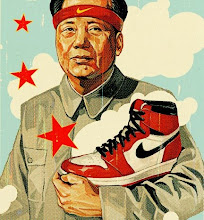
The best recent example of an ad that (I believe) is great is an Li-ning shoes commercial in the US. It came out around the same time as the NYC Times Square video, but definitely hits it out of the park in helping create a new understanding of China and Chinese people to the American audience. Only with commercials like these over a long period of time will any real soft power be created.


Tuesday, October 14, 2008

The NBA Pushes on in the Chinese Market

The NBA is making a bigger play within the China market. It has announced a venture to build/renovate/create 12 NBA-caliber arenas in China over the next 20 years. There are only 2 NBA-caliber arenas in China currently, the Wukesong Basketball arena in Beijing (host of the Olympics basketball events) and the arena in the Macau Venetian hotel.

As reported on ESPN.com:
The NBA has formed a joint venture with Anschutz Entertainment Group to design and develop about 12 multipurpose arenas in major Chinese cities.

"We think of this over the next 20 years, not the next year or two," he said, adding some would be new arenas and others would be created by renovating existing facilities.

"You're going to see a combination," Leiweke said. "Most of them will be built and designed from the ground up."

"Where feasible, the arenas will be developed in conjunction with surrounding cultural and entertainment districts potentially comprised of restaurants, retail outlets, cinemas, hotels, residential areas, sports training facilities and smaller live entertainment venues," the NBA said in a statement.
The NBA already has a considerable footprint in marketing itself in China.
  • Basketball is officially the most popular sport in China.
  • US Basketball team members at the recent Olympics made a big marketing push in China to promote the NBA & USA Basketball
  • It also has 3 Chinese-born players in the league, Yao Ming (Rockets), Yi Jianlian (Nets) and most recently, Sun Ye (Lakers) - all in big markets.
  • "The NBA currently has relationships with 51 Chinese telecasters, including a partnership of more than 20 years with national broadcaster CCTV," the NBA says. This means NBA games are on all the time on Chinese TV.

Friday, September 12, 2008

2008 Beijing Olympics: Comparing US's NBC and China's CCTV Coverage of the Opening Ceremonies

I finally came back to Shenzhen after staying in Beijing for the Olympics and post-Olympic festivities for about a month. After a few days of movie watching, video games playing and takeout in my new apartment, I finally decided to venture out into the local neighborhood in the Nanshan district.

At the local bootleg 5RMB bootleg DVD stand, I was able to get the new Mummy 3 as well as a great version of the Iron Man and Batman movies. (Note: Although the government has definitely cracked down on the sale of bootleg DVDs for the past few years, they are still found in different neighborhoods sold by a few people.) To my surprise I also found the DVD with the full version of the NBC broadcast of the 2008 Beijing Olympic opening ceremony. Wow.

After watching the live ceremony in Ditan park in north Beijing with 5000 people and rebroadcasts on Chinese TV multiple times, I wanted to see the NBC version. (My friend actually interned for NBC during the Olympics and helped edit and translate footage for different events.) I wanted to see how the US viewed the opening ceremony and the games. Remember back in 1996, Chinese people in America protested Bob Costas for his comments about Chinese athletes.

Overall, the coverage was very positive. Here are some of the things I saw:

  • NBC did an excellent job with the political issues surrounding China hosting the Olympics. They showed China in a pretty positive light with only a few comments referencing political issues. You could even see the commentators tread lightly on the political issues.
  • NBC camera work during the artistic portion at the beginning was better than the Chinese CCTV coverage. CCTV spent a lot of time focused on specific performers during each stage while NBC used many more wide-camera angles to get the big picture.
  • Bob Costas and Matt Lauer “warned” the American viewers about the sheer size and scale of the ceremony before it started. They also commented during the initial drum performance that viewers might consider it “awe inspiring and perhaps somewhat intimidating.”
  • In his post Opening Ceremony press conference, Jiang Yimou explained that the entire cost of the ceremony was less than the previous opening ceremony of the Doha Asian Games held in 2007, held in a oil rich Arab country. He wanted tog et the maximum effect for the least cost.
  • A huge amount of emphasis was put on the importance of the Olympics in China and the “overwhelming sense of pride the Chinese people in the days leading up to it. The same amount of importance was also on the idea of “harmony” in the Chinese psyche and the theme of the Olympics.
  • Commercial interruption on NBC really sucks for an event like this. No commercials in China. FYI, the transitions were pretty flawless just like the rest of the ceremony.
  • Quotes by Bob Costas: “Woah” (when Li Ning was lifted up to light the flame) and “When it comes to opening ceremonies, retire the trophy.”
  • NBC invited their China expert to co-host and give more perspective on the games. He did an excellent job with the symbolism invoked in the performance as well as more interesting tidbits into Chinese history. A lot of the political issues were also put in a historical context, something a lot of Americans lack while looking at China.
  • A great explanation of the combination of people doing "karate" around a group a school children was just an example - a harmony of man with nature is the only hope the children of the future have to solve all of the problems in the world.
  • There were a lot of shots of the members of the “Redeem Team”, the USA Men’s Basketball team. With a lot of star power and constant presence, Lebron James, Jason Kidd and Kobe Bryant were repeated shown to be taking pictures with other athletes from different countries.
  • While CCTV commentators were part of the event, reading scripted material that aided the audience in every piece, the transitions and symbolism in very Chinese artistic language, the NBC trio was very spontaneous, joking and dumbstruck by the show. This was probably because they weren’t “in the know”

Sunday, August 24, 2008

Cultural Captialism: Modern Dance Festival in Beijing

Last week, my friend and fellow Columbia Alum, Gigi, invited me to a modern dance performance in Beijing. I personally jumped at the opportunity since it was almost 2 years since I had been to a dance performance. As we all already know, Shenzhen is lacking in culture.

As Gigi reminded me in a text message: "Modern dance is supposed to play with the idea of free association of body movements and break the rules of traditional aesthetic styles"....blah blah.

The JK booking Dance Festival Beijing 2008 was held at the Nine Theaters in Chaoyang District. had a total of 8 total numbers with 5 different groups from both the US and China. The US participants were Odyssey Dance Theatre from Salt Lake City and Kim Robards Dance from Denver. Their Chinese counterparts included the Beijing Modern Dance Company and choreographers from the National Ballet of China and TAO Studio,

The dance performance was very impressive. The Chinese performances were displayed in interesting cultural costumes and backgrounds. The American performances were mostly in a traditional western context. The Odyssey Dance Theatre even performed "The Factory", a hip hop piece (I was at one point brought onto the stage and proceeded to dance with the performers for a few minutes). 2 of their dancers were even finalists on the American show, So You Think You Can Dance.

At the end of the performance, Gigi and I stayed for the discussion with the various directors. Most people in the audience asked about specific pieces that they enjoyed. What was the inspiration for it?

As a relative novice in art and dance, my question for the directors reflected on a overall view of the development of modern dance in China as well as how it felt have this kind of cross cultural collaboration.

All of the directors responded positively. They discussed the honor of being able to perform together with Chinese groups and the amazing expansion of modern dance and art in China in the past few years. They also talked about collaboration and learning from each other.

The most interesting comment came from Director Derryl Yeager from the Odyssey Dance Theatre. He discussed his excitement for his dance company and the future possibilities for more traveling tours and performances in China. He enthusiastically wanted to do more of these performance festivals in China.

By spending so much time in Shenzhen and Guangdong province, my primary experience has been associated with trading goods and services. This usually revolves around using cost advantages in one place to arbitrage in another. With my education company, it involves giving students the opportunity to experience another place through travel - almost a trading company dealing in people, instead of physical things.

At no point did I ever consider the idea of trading in culture or "cultural capitalism." All of the American directors had the expressed goal of promoting their own group in China. Just as the NBA and the MLB are heavily investing in China to further expand their market, or multinational corporations expanding their operations in China to expand their own market, these dance companies are in effect doing the same. They are using their time and energy to promote their own art.

These dance companies are also proceeding in a similar way as their business counterparts did. To begin tapping into the Chinese market, western corporations began by established joint ventures with Chinese counterparts. This was not only the only way they could get in at the time, but it was the best way to understand how to navigate China. This is almost what this festival was.

Also just as corporations passed on certain technical aspects or management ideas to their Chinese partners, so did the American dance groups show off their techniques and creative intensions.

What is most interesting is that it seems that there are truly a huge number of people who are interested in China's potential other than for business. Collaboration in academics, art, law, sport, society, culture and other areas are just as important as for pure business.

Saturday, August 23, 2008

2008 Beijing Olympics: Lebron James Marketing Push

One of my favorite things during the Olympics happens after all of the competitions are over. Everyday at about 9pm Beijing time, there is a daily variety show called "Champion's Circle" hosted on CCTV5 aka the CCTV Olympics channel.

On this show, the host invites numerous Chinese gold medal winners or famous athletes & coaches onto the show. Just about every gold-winning Chinese athlete has been on. They have an intimate interview with jokes, personal questions and serious questions. These include feelings about winning the gold, their personal story for how they got to this point. Other discussion topics include different cute or unique habits and other friendly and humors content for the studio audience. Before each guest leaves, they leave their handprint in a mold with their signature and date onto the "wall of fame".

In the background is a huge circular LCD screen showing graphics and videos while background "variety" music accompany the interviews. Between segments there are dancers who entertain the crowd.

On the night of August 22nd, after an joint appearance of 4 members of the Chinese Men's national basketball team - that included Yao Ming and Yi Jianlian, a surprise guest showed up on the show.

It was Lebron James.

Earlier in the day, Lebron and Yao Ming had made a joint appearnce at a event bringing together athletes from different countries to promote cross cultural understanding. The was Lebron's second stop.

Joking around with the host through a translator, Lebron James was interviewed for about 10 minutes with a huge mural of him dunking in the background LCD.

Questions posed included.... what did you think of the opening ceremony? Why didn’t you take up ping pong instead? Which color medal do you like better, silver or bronze? Lebron kept his cool and even made a few jokes himself.

At the end, Lebron James signed a basketball and gave it to the youngest kid in the audience so that the kid can forever love the game of basketball.

As Lebron James left, he was given a framed photo of himself as a gift. He then also made a hand print and hung it on the wall of champions.

I personally love Lebron James. He’s one of the best basketball players in the world, has a great personality and is a huge fan of Ohio State (probably the college he would’ve attended if he didn’t go to the NBA directly) which is my favorite too.

As a person who is establishing himself as a international icon and brand, Lebron James had the 2nd highest gross income for an athlete in 2007 (Tiger Woods was first). His marketing presence in China, a country where basketball is the most popular sport – and everyone loves the NBA is a great idea. Even though this show is produced in what Americans would consider a “variety show” format with cheesy music and sometimes even cheesier jokes, it is watched by millions and millions of Chinese viewers.

Lebron James is not only taking advantage of his opportunity to participate in the Beijing Olympics to the fullest (by appearing in events like this), his Cleveland Cavs also came last year for the first preseason NBA games ever in China – held in Guangzhou, Shanghai and Macau.

While his Nike posters in China are not as big as the one in Cleveland, or his fame in China isn’t as big as Yao Ming or Kobe Bryant (who has a huge following), Lebron James will have a great future in the China market.

Sunday, August 10, 2008

2008 Beijing Olympics: Media @ Opening Ceremony

Here are some videos of the Beijing Olympics opening ceremony celebration at Ditan Park on 8.8.08.


European or Aussie journalists interviewing an old lady who was sitting right next to me. There were tons of media everywhere!


A lot of American journalists were on site to capture the moment.

Sunday, September 23, 2007

Shenzhen YouTube Models

I'm sorry for not posting recently. I've been really busy with a number of projects. I've also been traveling a lot on business trips. Blogspot has also been re-blocked by the great firewall sooo... ugh.

Anyways, to kick back posting, I wanted to show everyone a Shenzhen video on Youtube. While there are normally thousands and thousands of videos from the west, Chinese content is rarely posted. This is definitely a needle in a haystack...

Talk about Shenzhen "model" culture...

Monday, August 13, 2007

Sex and China

A couple of weeks ago, I was with a bunch of friends and cousins at KTV place in Shenzhen, singing kareoke. Although I dont do that much singing (i'm a drinker at these things), I did notice something very interesting.

In between when songs are played, there are different ads and commericals displayed on the monitors throughout. These are usually promotional material for various drinks or cars. However, one really stood out to me.

It was a 10 second ad that featured, what I thought, was a cartoon figure shaped like a condom with disclaimers. At first, I didn't really understand it, but after conferring with my Chinese cousins, I figured out what was going on.

It was an ad for condom use and awareness for HIV/Aids. The ad basically wanted everyone to use condoms, and stated that the KTV places would distrbute them for free to any of its patrons.
Wow, I thought... some KTV.


So, it looks like it's working.

When issues of human rights, politics and censorship comes up to westerners, many use the argument that more trade with China will not only open up the country and its 1.3 billion people as consumers, but also help change the society and culture with it as well.

Well, i guess its partly working... in the form of a mini sexual revolution.

By no means am I refering to a trend that more people are having unprotected sex with a side of drug use (like in the American 1960s). What I am seeing is the quick and rapid development of a more open understanding and acceptance to sex and human sexuality.

A recent International Herald Tribune article entitled "A People's Sexual Revolution in China", describes the current explosion of sexuality in media.

Even five years ago, mainland books and magazines were banned from showing pictures of scantily clad models or publishing content that was deemed offensive or morally corrupt. The only sexual content to be found was in sex education pamphlets or books of nude Chinese women sold as "art works" at big city airports.

Today, however, with the Chinese economy booming and the government loosening its hold on the personal lives of everyday citizens, magazines are beginning to publish soft-core pornographic photographs, sexual fantasies and even clues about where to pick up call girls.

This change in sexuality has also been seen in the governmental policy towards HIV/Aids and condoms.

A few years ago, there were very few places where condoms could be bought. The Chinese government also denied the existence of HIV/Aids in China as well (kinda like the Reagan years in the US) Fast forward a couple of years and condoms can be bought everywhere. In every supermarket and convenience store, condoms are displayed and sold at the cashier next to the Peanut M&Ms. Recent reports by Reuters confirm that various government ministries have

has ordered all hotels, holiday resorts and public showers to provide condoms, part
of nationwide efforts to fight the spread of AIDS.

What I originally thought of as a progressive KTV place being responsible for its patrons has actually turned out to be a nation-wide campaign that not only helps prevent STD/STIs, but also, in a sense, further liberalizes and modernizes Chinese conceptions/stigmas regarding sex and sexuality.

Good job, China. Keep up the good work.

Wednesday, June 27, 2007

Challenges ahead for the iPod & iPhone in the China Market

In college it seemed like that I was the only one without an iPod. Everyone had one. Not only did consumers in the US embrace the iPod, Shuffle, Nano, ect., they also bought up the Powerbook laptops, G4s and now.. iPhones. Everyone.

In China, its a different story. Apple has very little presence here. Although all of its products are manufactured in the factories in Guangdong province and Shenzhen, no one actually has them here. When I have my iPod out on the subway or bus, everyone stares at it. They've never seen it.

What Chinese people have seen are the generic iPods. Since everything is produced here, there are hundreds of small factories and software houses that have copied all of Apple's products. These generic mp3s, and mp4s (with color video capability) have been out on the market for many years. It's possible to get these wholesale for less than $10... and Chinese people have been buying them. Apple and its products have little, if any presence here.

Well, i guess Apple is attempting to change that. In recent months, there has been a significant and growing presence of Apple marketing. Not only are they opening more specialty shops in the most glamorous malls, but they are also putting up ad campaigns on the street.

2 days ago, I also (finally) saw an iPod commercial on Chinese TV. It was the same exact one that Steve Jobs showed off at this year's Apple convention (where he introduced the iPhone)... instead it had Chinese subtitles on the bottom. Good start.


We'll see how the Chinese market develops for Apple and its wide range of products. It's success here is far from certain, however, as many people have discussed the issues of it. A great post on Silicon Hutong called "The iPhone is not for China" has already described a hard market for Apple to tap into. This is probably why a Chinese company has already made an alternative to the iPhone. Only time will tell.

Saturday, April 21, 2007

Shenzhen Public Transportation Entertainment (updated)

LCD monitors are everywhere in China. They are in random mom&pop shoe shops in back alleyways... playing music videos and lobbies and elevators constantly showing advertisements of a guy wanting to help me better learn English.

I’ve written about the increased use of LCD monitors in Shenzhen’s public transportation before with my posts Cab Advertising and Shenzhen TV is also talking about Melissa Theuriau. In the past couple of days, I’ve noted a couple of things regarding these LCDs in taxis and buses.

Taxis:

  • LCDs only come on when a customer enters and the price meter is started. This means that now it doesn't annoy the hell out of the driver during the entire day, looped to the same stuff.
  • The LCD content for viewing is very eclectic. There are very few commercials, current events and information about the city (as I would have expected). Instead, a huge amount of its content are funny cartoons, British hidden-camera shows and music videos.
  • The mute button has been upgraded. Before, a passenger could mute the display so that he/she didn't need to listen to the programming. Now, the mute only works for one segment only. After the segment is over, the sound comes back on automatically. I’ve had to hit the mute switch 10 times on some of my taxi trips.

Buses:

  • There are about 2 LCDs on each bus, one right behind the driver and one right behind the back door.
  • The LCD display and content is linked to the bus’s audio speaker system. This means that it can be projected throughout the bus so that all customers can hear. It also means that when announcements are made on the intercom regarding stops, safety, ect., it is projected instead of the music video.
  • The content is just as random and diverse as in the taxis. I’ve seen funny stuff, serious stuff and news.

The coolest part about the bus LCDs is that it can tune into live TV. Chinese news broadcast is the same everyday. The CCTV national news comes on at 7pm followed by the Shenzhen local news broadcast at 7:30. On a recent trip to my friend Jason’s house in Shekou, I was able to watch both shows live on the bus. How cool is that? I’ve seen it only a couple of times in different people’s cars. It’s supposedly done through satellite or wireless technology, but the quality is perfect. This is such a conveneient feature for the fast-paced Shenzhen life.

Friday, April 20, 2007

Chinese Radio: Loveline

Every time I go back to the US for a business trip, I’m lucky enough to go home and bring some stuff back to me to Shenzhen. Familiar DVDs, old family pictures and past books have made my Shenzhen apartment feel more like home.

One of the things I’ve recently brought over from the US that I thought I needed is my Alarm Clock/ Radio. I’ve had this thing since I was in middle school and I’ve used it on my bed stand ever since. I’ve definitely felt a void not having it here in Shenzhen with me. Currently I only have my cell phone to tell time and to wake me up in the morning. My clock would do a better job of those 2 functions while simultaneously giving me access to the radio airwaves. Yes.

So after I lugged this thing across the ocean, bought an extra power cord and power adaptor for it, I discover it didn't work. The clock would be progressively slow. For every hour of time that went by, the clock only showed 55 minutes went by. I tried a couple of other clocks and the same thing happened. For some reason, the US alarm clock just can tell time in China (I think it’s a current problem…anyone want to help me fix it?). I could only use the radio.

I’ve been to listening to the radio a couple of nights a week before bed. On top of that, i've had other opportunities to tune in while taking taxis (Shenzhen taxi drivers love talk radio) and on the bus, commuting to and from work. Although still limited in my exposure to radio in China, I have found many interesting things on the air waves.

This interest has made me decide to add a new category to my blog, “Chinese Radio”, in which everything will stem from radio content that I hear.

A few nights ago, I was restless and unable to sleep around midnight. Bored and annoyed with myself, I decide to turn on the radio and hopefully doze off with it acting as the background ambient noise. The radio didn't help. Instead, I grew incredibly interested in a show I just happened to stumble upon.

Imagine a women-specific version of Loveline, Chinese style (without the mentioning of drug use and without Adam Carolla’s antics

At the beginning I didn't know what was going on. I couldn't exactly understand all of the technical language that was spoken. But as it wore on, I got into the grove of it and could understand about 90% of what was being said. I just used context to guess at the last 10%. All in all, the hosts seemed to be enjoying themselves and the subject was entertaining. Here are the details:

  • There were 3 different female voices on the air. I’m assuming one was the host and the other two were experts/doctors.
  • The doctors answered questions on a wide range of topics, including sexual health, physical health, and mental health.
  • The doctors spoke in professional language, and from what I could understand, had a decent grasp of female health issues.
  • Questions were asked in many different forms, including direct calls, letters as well as text messages. There seemed to be a lot of text message questions.
  • The hosts all spoke in very good mandarin.

One of the more interesting calls that came on was from a 26 year old. In a nervous, slow and heavy-accented speech, she asked a question regarding having unprotected sex and the likelihood of pregnancy by using the “pull out” before climaxing method.

The experts calmly explained (correctly) that the “pull out” method was not a good way to prevent pregnancy because there would guys sometime ejaculate semen before actually climaxing (or pre-cum). Instead of doing this, she should either use some type of birth control, including male/female condoms and contraceptive pills. They were very comforting and accepting in their explanation and attitude to the caller.

When the inexperienced girl questioned how she could get the medication, the experts gave her a hospital location in proximity to where she was explained the procedure.

Success! The potential for one less Chinese baby!

Listening to this program got me thinking:

  • I’m actually not surprised that a show like this is on the air. While Chinese people, I would say, are sexually repressed, they feel decently comfortable about it when it’s done in professional and medical terms.
  • The text message questions are a good way to receive questions. Text messages are not only cheaper than traditional phone calls, but they negate the nervousness and awkwardness of the first-time caller. Chinese people might be ok with talking about health and sex, but they’re definitely always nervous.
  • This show is a really good idea for Shenzhen.
    • Population: As everyone already knows, Shenzhen is filled with tons of migrant workers, in which a majority of them are female. (My factory’s assembly line of more than 2000 is 95% female.)
    • Education: Most of the migrant workers are from the countryside and have relatively little education. Most have never been to high school. People often get word-of-mouth advice from just as ignorant friends.
    • Hospitals: Public health services are not keeping up with Shenzhen’s growing population. Also, health care costs are rising throughout the country.
    • Income: Migrant workers are paid relatively little and are saving up for their family. If something is wrong with their health, they often ignore it or try the least expensive treatment possible.
    • Combine all of these together and this show should be a great success.
  • The Chinese listener didn't seem that knowledgeable about the most basic bodily stuff…not just sex. Just about everything that was being asked seemed to be from high school biology/anatomy class.
  • One of the questions was about mental health and depression. I wasn't able to get a good read on it due to the technical language… but I do wonder what kind of training and experience the doctors on the show have on that.
  • I wonder if they have this in other cities. It has to be in the 1st tier cities. What about the 2nd and 3rd tier? It’s definitely a good resource.

Let’s only hope that these girls from the countryside have radios in their factory dorms to take advantage of programs like this. Maybe they should go buy a clock radio and see if it tells correct time.


Thursday, April 19, 2007

Chinese Children Get Married at an Early Age

Work has been very busy lately. The toy industry never seems to stop pushing and I’ve been cought in the middle of it.

Because of the job, I’ve been neglecting to read all of the Google Alerts on China and Shenzhen that I receive daily. Today while reading articles from the last few days I came across an interesting story from the Shenzhen Daily (web edition) entitled Kids’ Virtual Marriages Causes Concern.

Interesting. That title itself just drew me in.

It turns out that elementary school kids in Shenzhen have found a new hobby. Instead of collecting Pogs, like I did, these kids are getting married…online.

A survey by the newspaper of 49 pupils at a primary school in Luohu District showed that 24 percent of them had virtual "marriages", and 14 percent of them had even "married" twice.

Not only did the children get married (kinda like Vegas, but better, and 24 hours)…but they also

…"giving birth" to virtual babies online…

While some people questioned the game and its possible influence on the kids’ future love life…

Parents and educators worry that the virtual marriages would lead the kids into misunderstanding the reality of marriage.

…for teenagers, it's much easier to blur the line between real and virtual marriages. A junior high student identified as Guo Guo said many of her classmates had acted as if they were really in love with their virtual spouses. "In the game, the virtual husbands and wives claim to love each other so much. How can you say the virtual love will not influence your real emotions?" argued Guo Guo.

…others asked why marriages are put into online games in the first place…

"I don't understand why game developers put marriages into the games. With children marrying and divorcing so easily online, they may become irresponsible when they do marry in reality," [a mother] said, adding that children may get upset if their future spouses are not as prefect virtual spouses.

There are many other interesting tidbits in the article. You have to read it for yourself!!

My biggest concern regarding this game is that some might get the notion that getting married or into serious relationships will increase your points in life…

About 37 percent of the kids polled by the Shenzhen Evening News said they had virtual marriages to "increase their credits in the game," and 28 percent of them said they did it for fun.

…and we all know that’s not true.

I wonder how long it will be that a similar game pops up in the US, becomes popular, gets embraced and chastised by the religious right, then reported on CNN. Any bets?


Wednesday, April 18, 2007

Wal-Mart Bringing Sexy Back to Chinese Girls

I love Wal-Mart. If you are able to look past their contributions in the deterioration of small communities, aid in shutting down mom & pop stores, as well as not giving their employees livable wages, you find a place with “everyday low prices, always.”

Look, they even got the #1 Ranking on the CNN Fortune 500 List of American Companies with $351,139,000,000 of revenue in 2006.

While I have never gone to Wal-Mart as much as it’s shown on Paris Hilton’s show, The Simple Life, many people go there for everything. This trend has now spread to the Chinese market. Wal-Mart and its comparable hypermarket brethren, Carrefour, Trust-Mart and Tesco are dotting the Chinese urban landscape. Cheap and (usually) dependable products have made shopping at these hypermarkets are very popular.

Recently, at the factory, I have seen many of my colleagues wearing a different variety of English t-shirts. Since we are without a standardized dress code in the office, many people come to work in random and interesting attire…most usually from Wal-Mart.

Today, I held my weekly meeting regarding new projects with members of various factory departments. A good friend of mine, 阿花, who is usually decently well dressed, came into the meeting with a very interesting t-shirt on. The white girl t-shirt had “I (heart) backseats.”

What?!... I immediately burst out laughing...while everyone at the meeting looked at me strangely. Of course no one knew what it meant or the connotations behind it.

After the meeting, during lunch, I was able to ask阿花 about what she was wearing. It turns out that she bought the shirt because she liked the sparkly accessories and the red heart. She had bought the shirt at Wal-Mart with a few other friends. She knew the basic meaning of “backseat” but didn't know the connotation behind it. After I explained it to her, she promised to never again wear the shirt.

While thinking about it, I can’t imagine what Wal-Mart was thinking in selling these sexually-provocative t-shirts to a population who is 1. considered sexually repressed and 2. have no idea what they are wearing. In my 6 months in China, I have seen many other girl shirts that have “slut”, “bitch” or “hot stuff” on it. Maybe they were all bought from Wal-Mart, maybe not.

I would like to personally thank Wal-Mart for giving the Chinese population more subliminal sexual undertones while pursuing their profits. Maybe in the near future you can convince Chinese people to get random English words tattooed on them like current Americans are doing with Chinese characters.

That will be the day.

Sunday, April 08, 2007

Door to Door Male Cosmetics

Something interesting just happened.

At 4:45 pm Sunday, my apartment door bell rang. After opening the door, I found 2 guys, about 20-25 years old attempting to sell me cosmetic products. How weird.

Here's the low down:
  • Guy 1 wore a nice suit and seemed to have his stuff together. Guy 2 was a younger "intern" who looked lost and didn't know what he was doing... standing back in the hallway
  • Guy 1, who was making the pitch, first showed me his name card and introduced his company. I was then told that my line of apartments in the building (the H-line) had been targeted for a promotional cosmetic items for men and women. Lucky me.
  • He let me smell the different aromas as well as rubbed cream on the back of my hands.
  • He asked what my name was, if my girlfriend was in (because she would be really attractive), if I was from HK and what kind of products I use.
  • He showed me another set of French branded, female products that my hott girlfriend could use... but didnt want to explain too much about it because... hey, we're guys... and we dont talk about girl stuff.
  • For only 99.95 RMB, I could receive a unisex package of 5 products that retails for 600 RMB. On top of that, I would get the female package of 5 products for free! What an outstanding deal!!
Being that I only have 50RMB cash on me, I refused the offer. No biggie. I was also questioning the legitimacy of what they were saying. I could imagine 2 guys, who have nothing to do, buying a set of cosmetics for 40RMB wholesale, walking around trying to make a buck.

Nonetheless, I guess the sales industry is pushing forward... door to door. I just didnt expect 2 random guys. Cute girls would be a much better sell.

Thursday, April 05, 2007

McDonald's Goes Wireless Ordering in Shenzhen

Last Saturday I was in the 东门 shopping area to buy some bootleg DVDs. It was actually the first time I’ve bought DVDs since I’ve lived in Shenzhen. Not only was it cheaper than in other places (it was 5RMB compared to 7RMB or 8RMB in the north), but there was really good selection as well. They even had Spiderman 3! I didn't even know that they finished filming that yet!

There has been greater regulation recently on the sale of fake DVDs in China. Many of the old shops that sold them were disbanded by the government and now run mobile, makeshift stores in the middle of nowhere. Although the market is still there, it is much harder to sell it in the open.

After buying the DVDs, I went to McDonald’s to grab some food for my friend, Jason, who had thrown up in my bathroom the previous night. The 东门 McDonald’s that I went to was actually the 1st McDonald’s opened in China. There is a big plaque in the store. It’s kind of cool.

McDonald’s (and KFC) has been in the news lately regarding being cheap and not even following the Chinese minimum wage of 7.50RMB/hour for its workers. Capitalist pigs! Articles here, here and even CNN discussed this issue.

Well, I completely agree that McDonald’s and Yum Foods suck ass for not giving their workers even $1 per hour, especially for such a fast paced and demanding job their doing.

When I was standing in line, I saw something very interesting. There were tons of people in the restaurant that Sunday. All of the registers were overcapacity with more than 4 people in line. To deal with the huge demand, there were many McDonald’s employees walking around the back of the line to take people’s orders. What was beautiful was that this was done wirelessly through a handheld device!

Here’s how it went:

  • Employees walked in the back of the lines to take the orders of people waiting in line.
  • The used a wireless PDA-sized device and quickly entered their order into the touchpad buttons.
  • At the end of their order, the employee wrote down a number for the customer to tell the cashier so that he/she could access what the person had ordered and receive payment.
  • There were employees also walking around by the open seats to take orders as well. This is because since the restaurants are usually full, people often find seats before they order.

I looked it up online later and found the company called Infologix that provided this.

Infologix states that this wireless ordering system:

Increases sales by serving more drive-through customers (or waiting customers), improves McDonald's order accuracy, and makes everything more efficient."

I would agree. This is a innovative, thoughtful and much needed way for ordering in a lot of busy restaurants.

Has anyone else seen it?

Wednesday, April 04, 2007

Blogspot is back up! Is the Chinese gov't just Fucking with us.

Just a couple of days ago, I discovered that blogspot was not blocked anymore by the Chinese government (Xanga is still blocked). This means I can read more and write more without having to play around with the various proxies people have suggested.

This latest 2-week shutdown has been talked about everyone in the China blogging world. It has annoyed the hell out of not only people writing blogs in China (just ask the 1-year English teachers anywhere) but also the people reading blogs in China.

Why is this happening? Why did the Chinese government shut down blogspot for 2 weeks and then turn it back on? What the hell? As a good friend of mine said: The Chinese government is really pissing me off! I feel like that’s the sentiment of a lot of people.

Many people in the western media would answer these questions by talking about the crackdown of Chinese officials on blogging in general. Although China is seen to be a increasingly open society, the government still wants to keep control, and this is one way to do it. “Just look at how they are hampering the right to Freedom of Speech!!”

This argument would explain why some individual blogs or individual messages are filtered through the system. However, it wouldn't explain why they turn it off and on, back and forth.

Here are some of the other reasons I can think of (I’m assuming that there is a governmental office that is in charge of this):

  • There is a constant change of leadership in the office. Since its not too great of a job to head this department, leaders are filtered in and out. It’s almost like Easy Company in the 7th episode of Band of Brothers. After a few weeks to a few months, the new head of the department is done paying his due, and gets reassigned to somewhere else.
  • There is a constant change of policy. I’m sure that people in this department have seen the interesting and valuable facets of blogging and the internet. I’m sure that many of them read specific blogs all the time, just as I read the Shanghaiist, Danwei and China Law Blog. This means there could be constant discourse and disagreement on white sites to block and which sites not to block. “Are we going to restrict access to the entire blogspot or will we target the specific ones we don't like?”
  • This department realizes that their efforts are wasted due to proxies. Since there are ananomouse and scoobidoo out there, it is much more difficult for the department to have complete success blocking all of the sites. Although I have noticed that sometimes the proxies don't work, there are so many of them that any dedicated blogger will be able to access what he/she wants. The department knows that and doesn't want to bother anymore.
  • They are just fucking with us. They have the power to control a lot of people’s enjoyment, entertainment and emotions by flipping on and off a switch. How fun would it to be just to fuck with people every once in a while when they’re bored. I think this is the best explination.

As a kid growing up in China (I was born here and moved to the US when I was 6), one of my favorite activities during the spring through fall, was to try and capture dragon-flies. My friends and I would buy or construct a big net and sweep through the grassy park, trying to catch as many as possible. After the thrill of catching them was over, we would fuck with them until they were dead. In the past 20 years, I wouldn't be surprised if the dragonfly in China was extinct.

When my grandfather was a little kid, he did something that was similar to my chasing of dragonflies. When he lived with my family in Columbus, Ohio, he revealed that he loved to go out at night and try to catch as many of those backyard flies (that look like a bee, but lights up instead of having the stinger) as he could. He would then put them in a jar and have them serve as a light. Since there were a lot of them flying around at night in Ohio, my grandfather and I had a great time catching them. The only thing is, they would die within a day. I have honestly never seen one of those flies in China. They probably got killed by all of the kids.

Here's the USA equivalent:

Chinese people are sometimes very cruel. We like to fuck with insects, animals and other people without regard for anything. Just take the example of the bus driver who wouldn't let me off the bus in a traffic jam until I annoyed him to death, complaining. When Chinese people have authority, we like to use it…with disregard for others’ welfare. This nature is within the majority of the Chinese population, and I bet, within the department for internet censure as well.

Just wait for the next time blogspot is inaccessible. It will be caused by another bus-driver who doesn't want to open the door.

Monday, March 26, 2007

Shenzhen TV is also talking about Melissa Theuriau

Shenzhen not only has installed LCD monitors in its Taxis, but also have installed 11” LCD monitors in city buses as well. Mass media and marketing is spreading everywhere.

On my commute today, I saw something interesting being reported on Shenzhen Television Channel 1’s daily news broadcast. In an amazing display of the fusing of online media and traditional television, 深圳电视一台 was doing a report on the popularity and beauty of French reporter, Melissa Theuriau, online. Theuriau is a popular anchor in France that has been worshiped for her looks. The compilations of her reports on YouTube.com have nearly 1 million hits. Amazing popularity.

Shenzhen TV gave Miss Theuriau not only a 2 minute feature that included pictures, videos and quotes from various blogs. There was also extensive commentary from the news anchors, celebrating her complexion and skin color. Awesome.

Although some interesting stories discussed online should be brought over to traditional media, random mass-culture centric television reports from the premier Shenzhen TV news channel is just awkward and unexpected…especially on a subject matter relatively far from China. I guess there are just not that much interesting stuff going on in Shenzhen today.

Well, I guess she is incredibly hott…

Wednesday, March 21, 2007

Chinese Firewall Blocks Blogspot

I’ve been reading a bunch of articles about Chinese Internet activism lately.

It all seemed to begin with Starbucks getting kicked out of the Forbidden City. Now it has spread to a variety of different aspects of life, including public opinion – agreement and outrage over government/business/other countries’ actions, political, economical and social as well.

Just when things seem to be getting better and more open, something happens. Blogspot gets blocked by the Great Firewall. It’s cool though. No biggie. I’ll still try to post from HK.

Cool.

Sunday, March 18, 2007

I Want Delivery!

I really like my Shenzhen apartment. It is nice, clean and just the right size for me. It has all of the appliances and furniture that I need and even a nice sized gym on the 5th floor (I live on the 27th). It is a 10 min walk to the pedestrian-only shopping area (老街) and the bus to work stops immediately outside the building. Oh yea, I almost forgot… check out the view.

My only complaint about my apartment is the lack of restaurants downstairs. There are a couple of mom & pop noodle places but that’s about it. To get any selection of restaurants, I need to walk at least 5-7 minutes away. Most of the time, a 5 min walk in China isn’t a big deal. However, when I’m hung over and don't want to get out of bed (like most Sundays), I just want something, anything.

Solution: Delivery.

Before living here in China, I had thought that delivery did not exist here. I have a lot of family who live in Beijing, Harbin and Shanghai. I have never seen any of them order delivery and/or even have delivery menus. I was pleasantly surprised that it at least exists in Shenzhen. Because labor is so cheap here, many restaurants have a couple of people specifically for delivery purposes in the neighborhood. Although I don't imagine it to be Justin-Timberlake-popular, like it is around the Columbia University campus (oh how I miss eating Chinese Wai Lee) it is still most definitely needed.

Every couple of days when I’m walking in and out of my building, I see delivery people bringing food in. As a relatively new resident, without any knowledge of which restaurants deliver, I make an effort to talk to these delivery people and get a menu from them. What’s interesting is that after talking to delivery people on more than 40 different occasions, I have only obtained 1 menu.

Only 1. That’s it.

What are these people doing not carrying menus around when they’re fulfilling an order? I don't understand it. In a selfish sense, I want the added convenience to get some food without getting out of the apartment. But from a business perspective, how can these restaurants not require these people to carry tons of menus on them. This would not only be a good way to market their restaurant, but it would give the non-cooking population somewhere to order from.

Above all, how has any restaurant owners recognized that no one else is doing it and they can almost corner neighborhood market for delivery? My neighborhood has 4 buildings, 26 residential floors in each building and 12 apartments on each floor. Assuming that there are 2 people living in each apartment (a low estimate) the total number of people is 2500 in this building complex alone. Combine the 5 other complexes around me together, and it’s a sizable customer base for a small restaurant.

As a veteran of Columbia University fast food, I can only describe the competition for take-out as a war.

Here are the details:

  • Basically all of the restaurants post on online menu websites like dogears.net, menupages.com, so that people can have quick access to their menus.
  • Some places even list on services like Campusfood.com where the order can be made directly online, quickly and easily.
  • Restaurants advertise on billboards, newspapers, ect.
  • Every order has at least 1 menu in the delivery package.
  • Some restaurants even use their menu as an invoice/bill for the customer with the ordered items highlighted.
  • All delivery people have menus with them at all times. They place these everywhere, especially at the outside door to an apartment building.
  • Rivalries and aggressive tactics were used by the 3 local Chinese delivery places. Every time one place made a delivery to a dorm building, they would take all of the other 2 restaurants’ menus and replace them with their own. Talk about cutthroat.

All of these practices in Columbia University and NYC in general are geared to maximize the exposure of the restaurant in a competitive landscape as well as make it convenient for the consumer to order delivery. This is life in a mature marketing environment.

Now if only any Chinese companies can take a hint and figure stuff out, I might be able to order from them instead of going to McDonald’s.


Saturday, March 17, 2007

McDonald's: Super Sizing the cute Chinese Kids

I love McDonald’s. I have since I was a little kid. I can still remember my mom taking me to the McDonald’s on High Street right next to the Ohio State University campus as a little kid. Tuesdays, 19 cent hamburgers, 29 cent cheeseburgers. MMmmmm.

Fast forward 15 years later.

I was a little sick yesterday so I took off work and stayed home for the day. When I was young, it seemed that every time I was sick and went to get McDonald’s, I would get better immediately. That has now transformed into a tradition. Instead of having Chicken Noodle Soup when I’m sick, I have a Big Mac extra value meal with a sprite. Conveniently so, there is a McDonalds within a 5 minute walk from my current Shenzhen apartment (I can actually see it out of my window) when I can maintain this habit.

Although I do eat fast food, I do not consider it to be as bad as what’s made out in the 2004 documentary Super Size Me. In this documentary, a guy eats McDonald’s food for breakfast, lunch, and dinner for 30 days straight as an experiment. The results were surprising and interesting. To briefly summarize, after 30 days, the guy became depressed, had lost his sex drive, gained 20 pounds, and had liver issues, ect. (Please check out this documentary if you haven’t seen it. I own it on DVD (not even bootleg) and have watched it more than 5x.)

In my opinion, eating anything each and everyday could have adverse effects on the body. Many vegetarians and vegans don't get enough protein. People in China don't get enough calcium in a typical Chinese diet. It is important to have a complete diet with a variety of foods. Like my mom says: Eat at least 15 different types of foods a day (beans, rice, beef, carrots, ect.) and everything will be ok.

So back to the story,

Yesterday, I walked over to the place at about 12:30pm. I saw something very interesting before I arrived. This McDonald’s is right next to what I call a “spider overpass” (the 4 corners of an intersection is linked by 1 common overhead walkway) There were 2 young McDonald’s employees handing out discount coupon sheets on this walkway. Of course, for anyone who knows China, these discount coupon sheets are very common. Various companies and restaurants give them out very often to promote as a marketing too. What was interesting about this marketing drive was that it perfectly coincided with the lunch break of an elementary school less than 50 yards away.

(A little background: In Chinese secondary education, it is normal to have school be divided into 2 parts, a morning and afternoon session. Students are allowed to leave campus for lunch to eat at home.)

Of about 90% of the students leaving for lunch walked on this “spider overpass” to get to various destinations. The 2 employees had a stack of coupon sheets at least 10 inches high. They knew exactly what they were doing and made sure that every one of those kids received one.

In Super Size Me, one of the main things they narrated was the strategy of McDonald’s and fast food in general. The ultimate goal was to get the kids hooked on this stuff. Examples of this included a scene where 20 elementary school kids were shown pics of various famous people and Ronald McDonald, the McDonald’s mascot. Of course, everyone knew who Ronald was and no one knew anyone else. Another scene described the design of McDonald’s and its playground area and success in birthday parties as ways to lure kids in. Just look at the happy meal. McDonald’s invented kid’s meals.

I definitely believe in this hypothesis.

Here’s what I’m thinking:
  • China creates a good opportunity for this because more kids are responsible for their lunch. Yesterday in the McDonald’s, of the 200 people there, over 80% of the consumers were under 25, at least 60% wore the little blue/white school uniforms. Many of these kids were carefully browsing the coupons they just newly received. I guess this strategy is working.
  • Another good strategy for fast food companies like McDonald’s in China is to give away student discount cards that last for a year. These cards give about a 20% discount on selected items for the student.
  • I didn't see KFC representatives out in force like the McDonald’s employees. Even though KFC has a bigger market share than McDs in China, I wonder what their kid strategy is and its importance. I do know however, that they give away student discount cards as well.
  • McDonald’s creates such a fun and embracive atmosphere, that kids love it. Yesterday, I even saw a few kids help the hand out the coupon sheets to their friends. That’s just marketing at its best.
  • I guess I’m a product of the “luring of kids”. I was lured in as a little kid and I’m still a consistent McDonald’s consumer as a yuppie.
Although I have been "lured" in, I have an athletic background and try to watch what I eat as much as possible. As a disciplined adult and someone with a diverse palate, I would never go on a Super Size Me-esque binge. I will however, enjoy a Bic Mac or 2 once in a while.

What is difficult to see is how Chinese kids will be able to control themselves. These kids are being sucked in every single day. Let's just hope that McDonald's don't form an alliance with the schools and make it mandatory for kids to stay at school for lunch.

Has anyone tried their new mini Chicken wraps? Those are hella good too.